Support should never carry a social cost
Support Is Not Socially Neutral
Support is meant to remove barriers.
But in a school setting, support is also visible.
A teacher aide sitting beside you.
Extra time, extra prompting, extra explanation.
Different assessment formats. Different routines.
Those supports can be necessary. They can be life-changing.
But they can also shift how peers relate to you — not because peers are “bad,” but because adolescence runs on unspoken rules: pace, ease, confidence, and fitting in.
Inclusion isn’t only about access to a classroom.
It’s also about whether a child can participate without being socially “othered.”
Support can remove learning barriers — but it can create social barriers if the environment isn’t prepared.

Presence isn’t the same as belonging.
The Peer Hierarchy Nobody Talks About
School has a social hierarchy long before anyone names it.
Peers notice:
- who gets extra help
- who gets protected by adults
- who gets corrected on someone else’s behalf
- who slows the group down (even when they can’t control it)
Support can unintentionally place a student into a category.
Not always “bullied.” Not always “included.”
Sometimes just… treated differently.
And the difference can sit quietly under everything: friendships, group work, lunchtime dynamics, who gets invited, who gets ignored.
Belonging is shaped by what peers do when adults aren’t watching.
When Support Feels Scarce Attention Becomes Currency
In primary school I learned early that attention can become a kind of currency.
There was a girl whose disability was more severe than mine and she received a great deal support. She was also very intelligent. But whenever attention shifted onto me, even briefly, she would become upset.
That’s not about jealousy. It’s about scarcity. When support is inconsistent, children learn to fight for visibility — because visibility can feel like safety.
When support is scarce, children learn to compete for it.
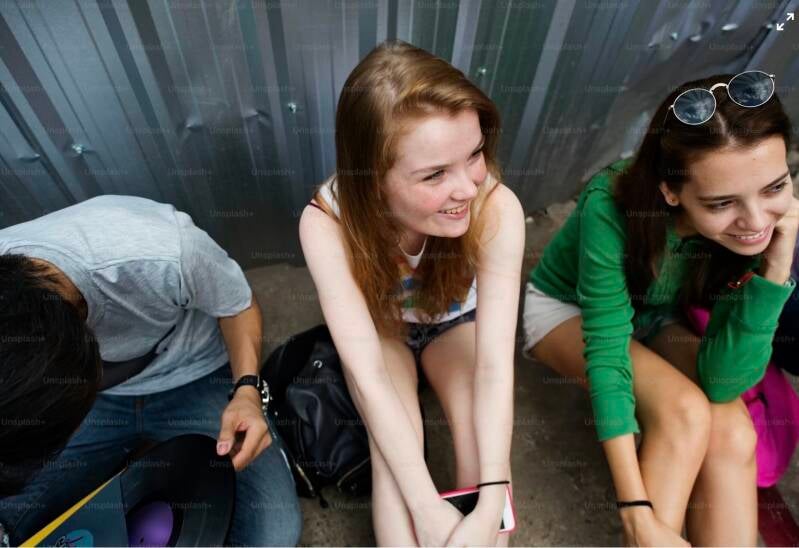
Some exclusion is quiet, but it still lands
When an Accommodation Becomes a Spotlight
There was a term in high school when we had verbal assessments in class.
Because of my speech impediment, my usual accommodation was to write an essay instead of delivering a speech. It wasn’t about avoiding work — it was about being assessed on the content, not on the barrier.
But that term we had a replacement teacher.
My teacher aide explained my accommodation, and the teacher insisted I give the speech anyway.
Her, reasoning was that I intended to go to university after graduation. She told me I needed to get used to verbal assessments.
I was so anxious that I rehearsed over and over. I practised until the words felt automatic — not because I wanted to perform, but because I was trying to reduce the risk of humiliation.
On the day, I remember the giggles and the whispers while I was talking.
That moment wasn’t just about nerves. It was about what happens socially when an accommodation is treated like a preference — and a student’s difference becomes public.
Even when the intention is “preparing you for the future,” the impact can be: your needs are negotiable, and everyone gets to watch.
Accommodation isn’t a reward — it’s access. And access shouldn’t come with humiliation.


Support can help academically — and still feel socially exposing.
Whispering Isn’t “Nothing” —It’s Relational Aggression
People often imagine bullying as loud, obvious cruelty.
But some of the most damaging social behaviour is quiet.
Whispering.
Side glances.
Private jokes that you’re not part of.
Conversations that change when you approach them.
This is often called relational aggression — social harm done through exclusion, gossip, subtle rejection, and controlling access to connection.
No one has to insult you directly.
Sometimes the message is simply: you’re tolerated, but you’re not safe here.
Social harm is often quiet — but children feel it just as deeply.

Accommodation should not be a stoplight
Friendship Doesn’t Always Equal Understanding
I remember a girl who was part of my buddy system and also part of my wider friendship group.
We had so many similarities that I genuinely think we could have been close friends if disability wasn’t part of the picture. But she never fully understood my disability — not in a cruel way, just in the way many peers don’t. She could relate to my personality, my humour, my interests… but she didn’t understand the invisible effort behind how I participated.
And she didn’t really try to get to know me in the way that mattered. Instead of asking me directly, she would often bypass me and ask another friend — as if connection could happen around me without needing to include me. Socially, that kind of bypassing is its own message: you’re present, but you’re not the easiest person to engage with.
What made it more complex was that she and my teacher aide had a mutual dislike for each other. That created a quiet social triangle: her discomfort with my support, my aide’s protectiveness, and me in the middle trying to keep everyone steady.
In adolescence, belonging is shaped by small signals — who makes eye contact, who includes you in the conversation, who asks you the question. When those signals are inconsistent, it creates a push–pull dynamic: we connect, then she pulls away. Not with open conflict — but with distance.
Avoidance is a form of exclusion — even when no one says anything out loud.
Friendship doesn’t always mean understanding.
When Adults Correct Peers, Social Cost Can Land on the Child
Adults step in to protect students. That matters.
But in peer dynamics, correction can shift hierarchy.
If an adult repeatedly corrects peers around one student, peers can start to associate the student with:
- getting others “in trouble”
- changing the rules
- increasing scrutiny
- making things uncomfortable
Even when the child didn’t ask for intervention.
Sometimes the supported student becomes the social “reason” things changed — and that can create resentment, distance, or quiet rejection.
This is why inclusion isn’t only about supporting the child.
It’s about shaping the environment so peers understand equity — and so support isn’t treated like special treatment.
Support should never make a child socially “costly” to be around

Sometimes the social cost shows up after the moment ends.
What Real Inclusion Has to Protect
Real inclusion isn’t just “they’re in the room.”
It’s:
- Do they feel safe to speak without shame?
- Can they participate without being socially punished?
- Are peers given enough understanding to make inclusion possible?
- Is support delivered in a way that reduces attention, not increases it?
Belonging isn’t built through proximity.
Belonging is built through emotional safety.
Inclusion without emotional safety is just placement
Closing Reflection for Parents and Educators
It’s normal to focus on academic access — because that’s what school measures.
But children experience school socially first.
They learn quickly whether they are safe, whether they are wanted, whether they are tolerated, and whether their support will cost them connection.
If a child is resisting support, avoiding class, masking, or withdrawing, it doesn’t always mean they “don’t want help.”
Sometimes it means help has become a spotlight.
Sometimes it means support has a social price.
And no child should have to choose between being supported and being accepted.
If this resonates, I’ve created a small reflection tool for email subscribers only called Belonging Without Spotlight — a simple check to help adults notice when support is helping a child participate, and when it might unintentionally be making them feel more visible, exposed, or socially unsafe.
Support should never make a child socially “costly” to be around.

No child should have to choose between support and acceptance.
Add comment
Comments