Belonging doesn’t always start with a group — sometimes it starts with one person
When Belonging Starts With One Person
When we think about belonging at school, we often picture a group.
A group of friends.
A group to sit with.
A group to be part of.
But for many children, belonging does not begin that way.
It begins with one person.
One person who feels safe.
One person who makes things easier.
One person who changes how the day feels.
Belonging starts with one

Sometimes belonging starts with someone making space
Social Anchors at School
Some children move through school without a clear social anchor.
No one to naturally return to.
No one to check in with.
No one who signals “you belong here.”
That absence can be quiet, but significant.
Because without a social anchor, every space can feel uncertain navigate.
Where to sit.
Who to join.
How to enter a conversation.
And that uncertainty can shape the entire school experience.
Belonging often starts with having somewhere — and someone to return to .

Belonging doesn’t always begin with a group
The Impact of Having One Safe Friend
For some children, one friendship can change everything.
Not because it solves every challenge.
But because it creates a starting point.
I remember when one peer started sitting with me in class.
She would wait for me.
She would save me a seat.
At first, I wasn’t sure how to read it.
I didn’t know if she was being friendly because she wanted to
or because she felt like she had to.
It took time to trust that it was genuine.
But over time, something shifted.
Her friends started talking to me in class too.
Then she invited me to sit with her and her friends at lunch and recess.
And that was when things changed.
That was when I was able to enjoy high school more.
Not because everything became easy —
but because I finally had a place to return to.
It didn’t start with a group.
It started with one person.
Sometimes one safe connection can change how school feels
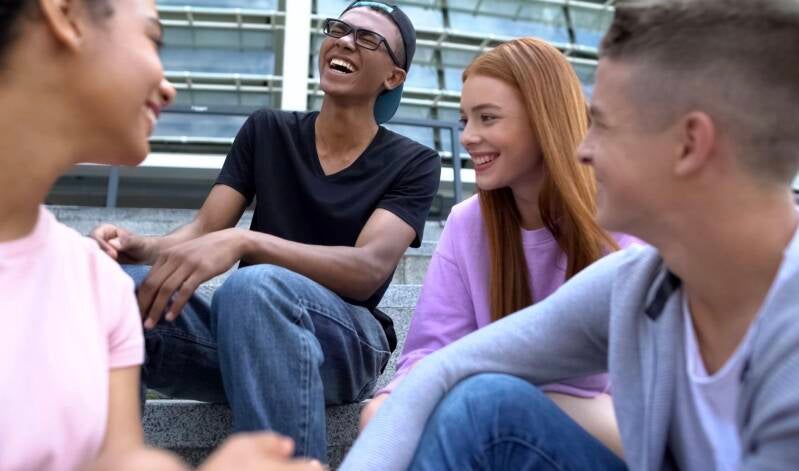
Connection can grow from one person

Not knowing where to go can shape the whole day
When Belonging Becomes Unequal
Sometimes, connection can look like belonging on the surface, but feel different underneath.
I remember a friendship in primary school where we were often paired together.
We had similar disabilities, and over time, I became her main connection.
She was a kind person, but she didn’t open up to others.
And slowly, the balance shifted.
The friendship began to feel less shared —
and more like something I was responsible for.
I began to lose other friendships around me.
Not because anyone intended that to happen.
But because the connection was no longer equal.
Looking back, that experience stayed with me.
Because belonging needs to feel mutual.
Not dependent on one person holding everything together.
Later, there was a moment where our schools could have aligned again.
And I remember feeling clear about one thing.
I wanted to support her —
but not at the cost of losing my own sense of belonging.
That was something I had already experienced once.
Belonging needs to feel shared — not carried by one person

Sometimes the change is quiet, but felt
Peer Allies Without Pressure
Children can support each other in meaningful ways.
But that support works best when it is not forced.
When it grows naturally.
When it feels equal.
When it is not framed as responsibility.
Because when support becomes a role, it can create pressure on both sides.
And that pressure can make belonging feel less real.
Belonging grows through connection not obligation.
Group Dynamics
Friend groups are not always stable.
They shift.
They change.
They grow in different directions.
I felt that shift again in Year 11.
One of my close friends changed schools.
I still had my core friendships, but things were starting to shift.
People were gaining more independence.
Working.
Dating.
Having more freedom that I wasn’t always part of.
And the group started to feel different.
There was one person in particular who began to take the lead, and we were never especially close.
I was never the type of person to make a big deal about being left out.
But I would have liked to understand what was happening.
Instead, conversations would stop when I approached.
And when I was included, it didn’t always feel like I had been chosen.
It felt like I was being included because they felt they had to.
And that changes how belonging feels.
Because being around people is not the same as feeling part of something.
Being included is not always the same as being chosen

Being around people doesn’t always feel like belonging
When Belonging Becomes a Role
Sometimes, support around friendships can unintentionally turn belonging into a role.
A “buddy.”
A “helper.”
A child being asked to include someone.
While well-intentioned, this can change how connection feels.
Because friendship is not something that can be assigned.
It needs to be mutual.
Chosen.
Natural.
Built over time.
Connection can be supported — but it cannot be assigned.

Belonging needs to feel shared

Connection feels different when it becomes a role
Why One Person Matters
A whole group is not always what makes the difference.
Sometimes it is one person who:
- waits
- includes
- understands
- makes space
That one connection can:
- reduce anxiety
- increase confidence
- make participation easier
- create a sense of safety
Because belonging does not always need to be big.
It needs to be real.
Belonging often brings with one person who makes space
What This Means For Adults
Adults cannot create friendships.
But they can shape the environment around them.
They can:
- create opportunities without forcing connection
- reduce pressure in social situations
- notice who is consistently without a connection
- support access without assigning relationships
Because belonging is not something we build for children.
It is something we make space for.
Adults can support belonging by shaping the space — not the relationship

Sometimes it only took one person to change how school felt

Belonging can change how safe being alone feels
Closing Reflection for Parents and Educators
Some children are not looking for a group.
They are looking for one person who makes the space feel safer.
And that can be enough to change how school feels.
Because belonging does not always start with many.
Sometimes it starts with one.
If this is something you are reflecting on, I have created a Gentle Connection Starters resource — shared with email subscribers — designed to help schools and families create early, low-pressure opportunities for students to meet before high school begins, so there is at least one familiar face when they arrive.
Because connection cannot be forced.
But it can be given somewhere to begin.
Belonging often begins with one familiar face
Add comment
Comments