Words can sound encouraging while still making pain, barriers, limitations and support needs harder to acknowledge.
When Positivity Leaves Less Room for Reality
There are many ways people try to speak positively about disability.
Disability is a superpower.
Differently abled.
Special needs.
You’re so inspiring.
Don’t let your disability define you.
Everyone has limitations.
There are no limits.
Often, these words come from a good place.
People may be trying to challenge negative stereotypes, recognise someone’s strengths or make sure a child with a disability grows up believing in what is possible.
And sometimes that language can genuinely help.
But positive language can also become uncomfortable when it leaves little room for the parts of disability that are difficult.
Pain can still exist.
Barriers can still exist.
Support can still be necessary.
Some things may genuinely be beyond a person’s capacity.
The question is not simply whether the words sound positive.
It is what those words allow the person with a disability to say about their own life.
Disability does not have to be turned into something positive before it can be spoken about with respect.
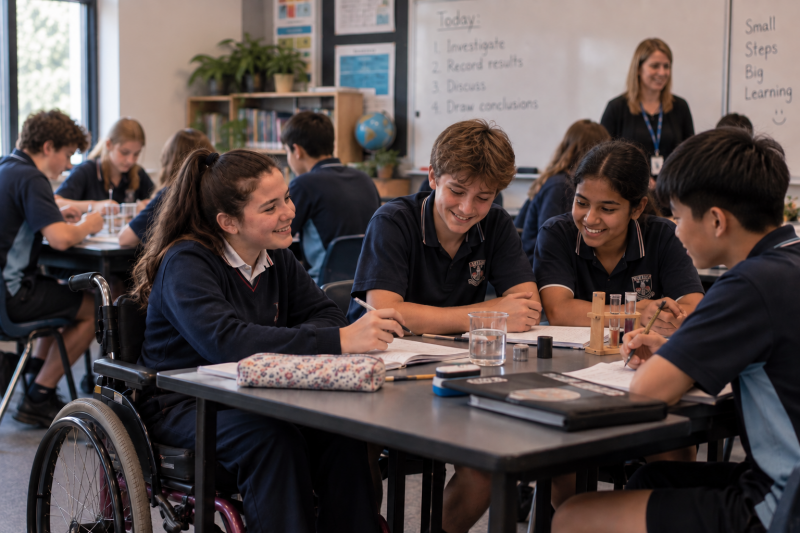
Disability does not need to be renamed or softened before a person can be seen for everything else they are.
When Everyone’s Experience Becomes the Same
Sometimes people try to relate to disability by finding an experience of their own that seems similar.
The intention may be connection.
But there is a difference between finding common ground and making experiences equivalent.
I remember being told once that someone had a disability because she wore glasses.
On another occasion, someone compared having a disability with having a knee replacement.
Both experiences can involve genuine needs. Someone recovering from major surgery may experience pain, reduced mobility and a significant period of dependence on other people.
But the comparison didn’t make me feel understood.
It felt as though some of what I was navigating was being reduced.
A knee replacement may involve an extremely difficult period followed by recovery and a return to life without those same support needs.
My disability does not have that endpoint.
I continue to navigate support systems, funding decisions, accessibility and the practical realities of needing assistance.
That does not make my experience more important than someone else’s.
It simply makes it different.
We do not need to erase those differences in order to relate to one another.
Sometimes understanding begins with being able to say:
Our experiences are not the same, but I still want to understand yours.
Common ground should not require minimising meaningful differences.
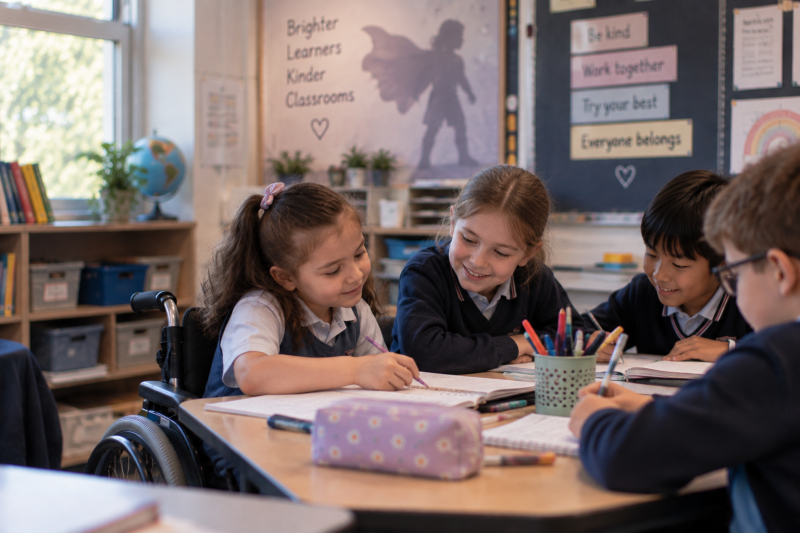
A person should be able to talk about what disability makes difficult without feeling they have failed to find the superpower in it.
Being More Than Your Disability Can Mean Something Different
Not every message about looking beyond disability is harmful.
Growing up, I was taught not to let my disability define me.
For me, that message was valuable.
It didn’t mean pretending my disability wasn’t there.
I knew I had limitations. I knew there were things my disability would make more difficult.
But I was also made aware that I was more than my disability.
I was a whole person.
There were things I could do, things I wanted, things I was interested in and possibilities for my future that extended beyond other people’s assumptions about disability.
That way of thinking has taken me a long way in life.
There is an important difference between telling a child:
Your disability is not the only thing that defines who you are.
and communicating:
Your disability should not matter.
One expands identity.
The other can erase part of someone’s reality.
Children with a disability should be able to discover everything else that makes them who they are without learning that disability is something they need to distance themselves from.
Seeing the whole person should make room for disability, not require its disappearance.
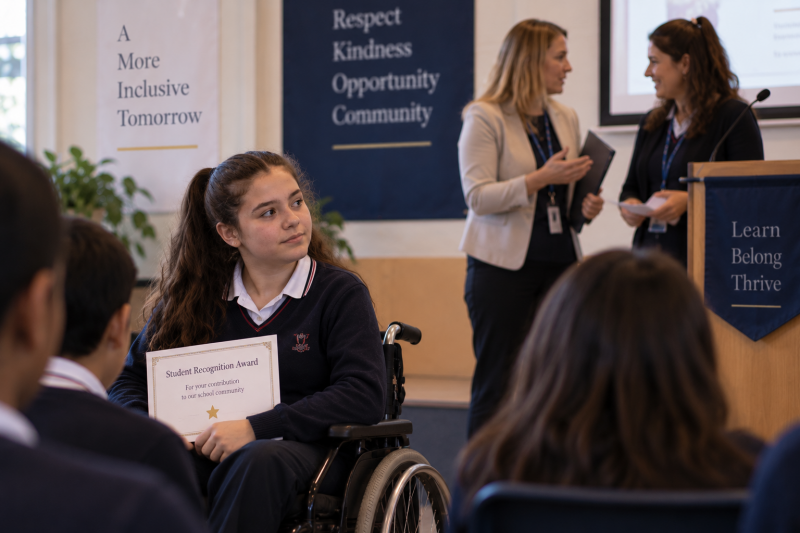
Celebrating someone’s achievements should never require taking ownership of the personal story behind them.
Positive Messages Still Need Room for Reality
We do not need to replace negative stereotypes about disability with another extreme.
Disability does not have to be either tragedy or triumph.
A person can be proud of who they are and still find aspects of disability difficult.
They can appreciate strengths they have developed and still wish some things were easier.
They can have an ordinary, meaningful life and still encounter unfair systems.
They can achieve something significant while acknowledging the support that helped make it possible.
They can recognise a genuine limitation without giving up on themselves.
And they can need substantial support without that support diminishing their capability or worth.
Positive messages are most useful when they expand what a person believes is possible without deciding what they are allowed to find difficult.
Sometimes encouragement means saying:
I believe you can do this.
Sometimes it means:
Let’s find another way.
And sometimes it means:
You don’t have to prove anything here.
There should be room for all three.
Believing in possibility should still leave room for capacity.

Being taught that I was more than my disability helped me. But being more than my disability has never meant that other people get to decide what my disability means to me.

Positive language can encourage a child while still leaving too little room for the difficult parts of their experience.
Disability Is Not a Negative Word
Sometimes people avoid the word disability because they worry it sounds negative.
Terms such as differently abled, special or unique abilities can be used with the intention of focusing on what someone can do rather than what they cannot.
But disability is not an insult.
Avoiding the word can unintentionally suggest there is something wrong with being associated with it.
Of course, language is personal. People with a disability may describe themselves in different ways, and those preferences deserve to be respected.
The bigger question is why the language is being changed.
Is it because the person prefers another term?
Or because the people around them are uncomfortable acknowledging disability?
We can recognise someone’s strengths without needing to rename their disability.
We can talk about capability while still acknowledging support needs.
And we can see the whole person without pretending disability has no influence on their life.
Respect does not require pretending disability is something else.
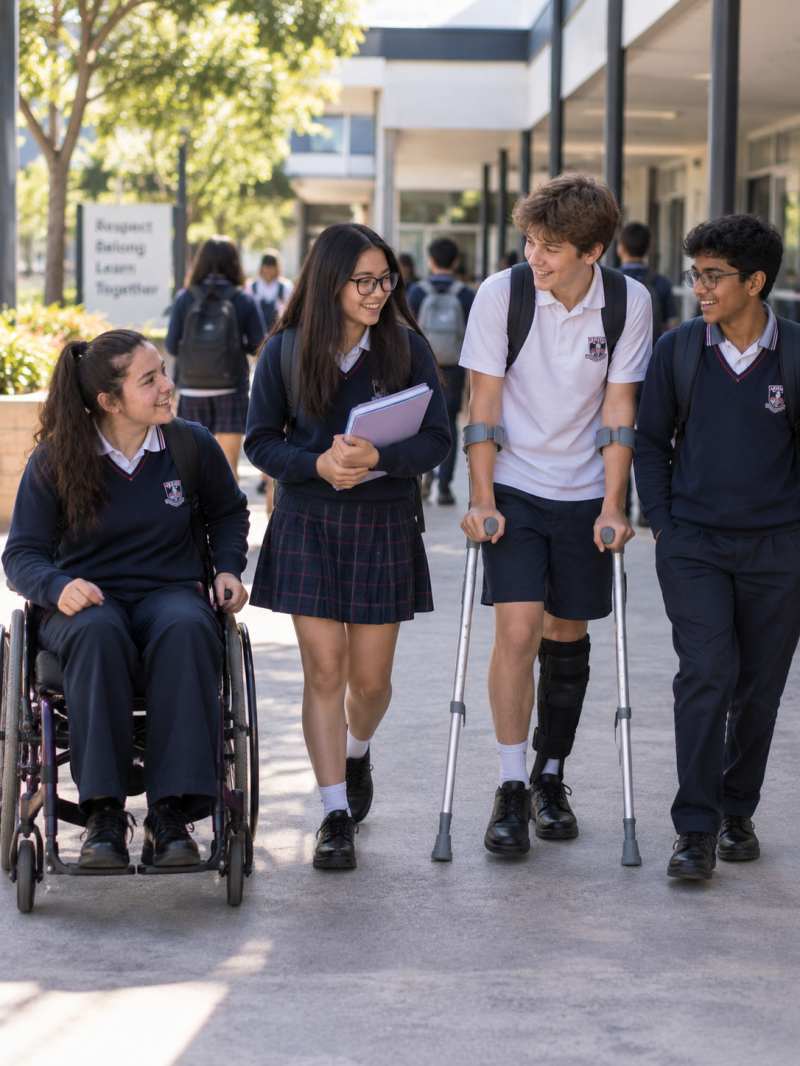
Finding common ground does not require pretending different experiences create the same barriers or support needs.
When Disability Becomes a Superpower
Calling disability a superpower can sound empowering.
And if a person with a disability chooses that language for themselves, that is theirs to define.
The difficulty comes when the label is placed onto someone else.
A child may repeatedly hear that their disability makes them stronger, special or extraordinary.
That message can challenge assumptions about what they are capable of.
But it can also leave an uncomfortable question:
What happens when disability doesn’t feel like a superpower?
There may be days when it means needing more help.
There may be pain, exhaustion or frustration.
There may be inaccessible environments that make participation unnecessarily difficult.
There may also be things a person’s body simply cannot do.
None of that means the person lacks resilience or has failed to think positively.
People with a disability should be able to recognise strengths that have developed through their experiences without being expected to transform every difficult part of disability into something positive.
A person should not have to find a superpower in disability before they are allowed to talk about what is difficult.
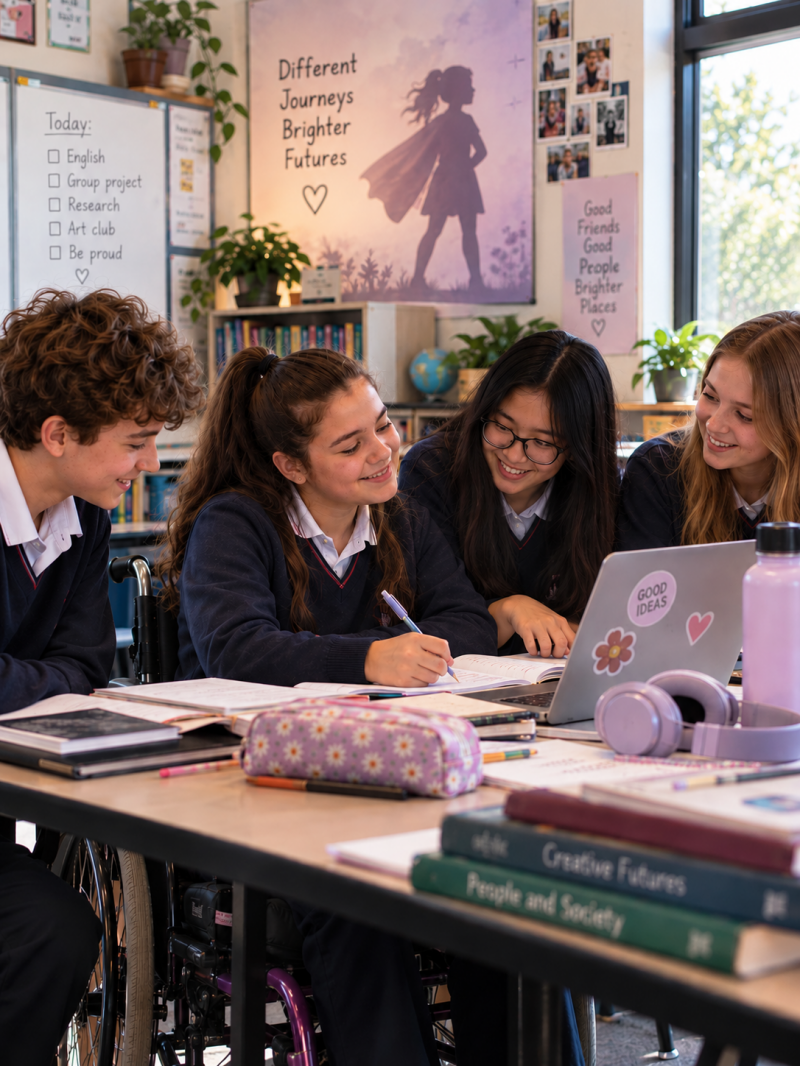
Being more than your disability does not mean disability has to disappear from the picture.
When Inspiration Takes Ownership of Someone Else’s Story
Being called inspiring is not automatically a problem either.
Sometimes someone has genuinely done something remarkable.
Recognition can be meaningful.
But disability can also make the boundary between recognition and exposure surprisingly thin.
I have been called an inspiration for my academic achievements and for overcoming significant personal challenges.
At times, that recognition went further.
I was put on display and parts of my personal experiences were discussed publicly.
I remember questioning why my experiences were being treated as extraordinary when many people have overcome difficult things.
I was told that people didn’t know everything I had been through.
Eventually, though, I came back to another question:
Who gave someone else the right to tell them?
A person’s experience does not become public property because somebody else believes it could inspire people.
Children with a disability deserve the same ownership over their personal experiences as anyone else.
There may be things they are proud to share.
There may be things they want to keep private.
And those boundaries can change as they grow older.
Celebrating someone should never require taking control of their story away from them.
Admiring someone’s story does not give us ownership of it.
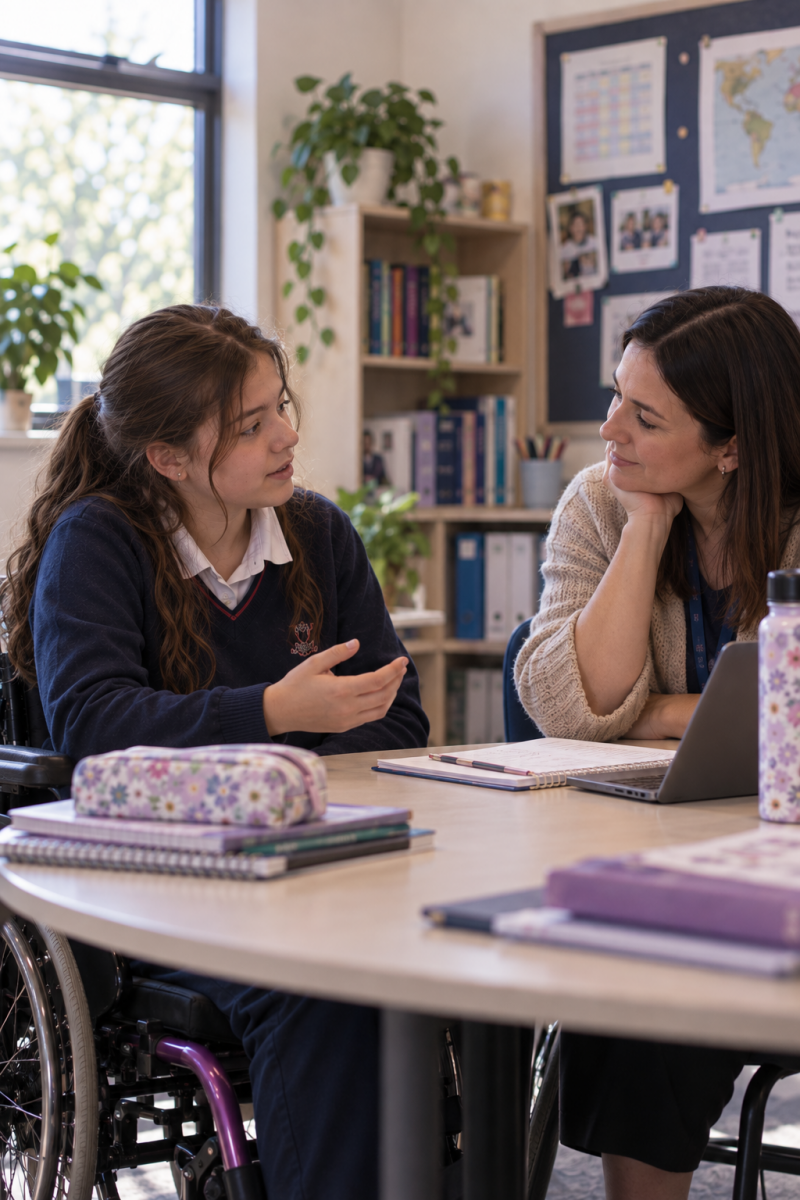
Sometimes the most respectful response is not to make someone’s experience sound more positive, but to make room for what they actually want to say.
A Reflection for Parents, Educators and Support Providers
There probably isn’t one perfect way to talk about disability.
People have different preferences. Words can also carry different meanings depending on who is using them, why they are being used and what experiences sit behind them.
So perhaps the most useful question isn’t simply:
Is this a positive thing to say?
Instead, we can ask:
Who chose this language?
Does the person with a disability use it about themselves?
Does it leave room for them to say something is difficult?
Can they acknowledge a limitation without being told to think more positively?
Can they ask for help without that being seen as contradicting their capability?
Are we celebrating a genuine achievement, or are we surprised that someone with a disability did something ordinary?
Are we sharing someone’s experience because they want it shared, or because we believe their story will inspire somebody else?
Are we avoiding the word disability because the person prefers different language—or because disability makes us uncomfortable?
Language can build confidence.
I know that from my own experience. Being raised to understand that I was more than my disability helped me see possibilities for myself beyond the limitations and assumptions other people might place around me.
But language can only empower someone when there is still room for their reality.
Children and young people with a disability need to be able to talk about strength and struggle.
Capability and limitation.
Independence and support.
Pride and frustration.
Achievement and the effort behind it.
That is why I created What Does This Language Leave Room For?, a reflection resource for parents, educators and support providers. Rather than providing a list of words that are right or wrong, it encourages us to think about what our language communicates, what it might unintentionally minimise, and whether the person with a disability still has ownership of their experience and story.
Because respectful language is not simply about finding the most positive way to describe disability.
It is about creating enough space for people with a disability to describe their own lives honestly—even when what they have to say is complicated, difficult or different from the story others expected to hear.
Respectful language should make more room for a person’s reality—not ask them to make that reality easier for everyone else to hear.
Add comment
Comments