Peer support can be a valuable part of school life. But when a child’s access depends on it, we need to ask what support the system is not providing.
When Children Quietly Make the System Work
Children help each other at school every day.
They pick things up.
Wait for each other.
Explain something a friend missed.
Help someone find where they need to go.
Notice when another child is struggling and step in.
These moments can be a natural part of friendship and school community.
But there is an important difference between a peer choosing to help and a child needing that peer’s help in order to participate.
Sometimes a school can appear inclusive because everything seems to be working.
The student gets to class.
They participate.
Someone helps when they need it.
The gap may only become visible when the helpful peer is absent.
That is when we need to look beyond the kindness of individual children and ask whether peer support is adding to a strong support system or quietly holding an under-supported one together.
Sometimes a system looks like it is working because children are quietly making it work.
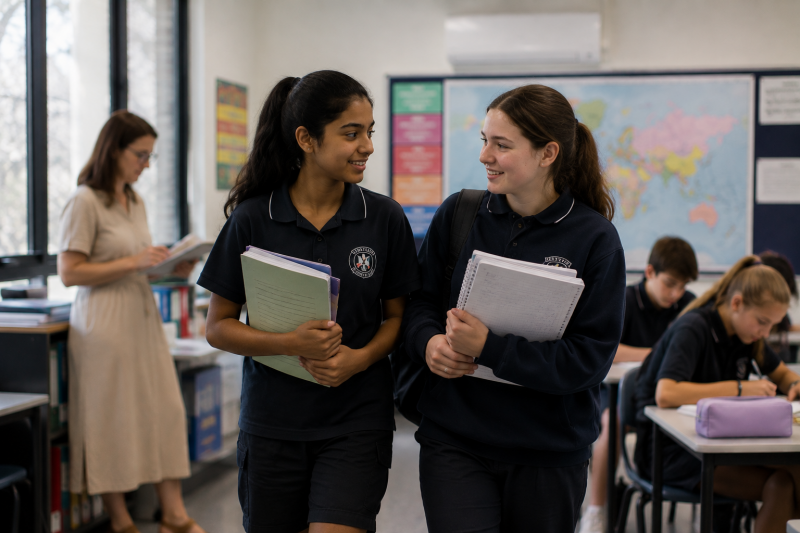
Peer support should add something to inclusion. Essential support should remain reliable even when a friend or classmate is not there.

Peer support can be a valuable part of school life. But there is a difference between choosing to help and being needed for someone else to participate.
Peer Support and System Support Are Different
Peer support is not inherently a problem.
Children should be able to help one another.
Friendships often involve small acts of care, and inclusive school communities should encourage children to notice and support each other.
But peers and formal support have different responsibilities.
A friend can choose to help.
A peer can say no.
They can be absent.
Friendships can change.
Children move classes.
They have their own learning and social needs.
Formal support should provide something different: reliability.
A useful question for adults is:
If this peer wasn’t here today, could the child still participate?
If the answer is no, the peer may be providing something the system itself needs to address.
Peer support should add to inclusion, not hold it together.
When Peer Support Becomes Part of the System
Sometimes reliance on peers develops because there is a gap in formal support.
It may even be presented positively.
A buddy.
A helpful classmate.
A peer who knows what to do.
But from the perspective of the child relying on that arrangement, it can feel much less secure.
When I started high school, the buddy system wasn’t only designed to help me socially.
The education department had initially refused to fund a full-time teacher aide because I had not had one in primary school.
My peers therefore became part of how I was supported in class.
If my assigned buddy was at school, I knew who I was supposed to rely on.
If they were absent, I could suddenly have to rely on someone I barely knew.
That caused me anxiety.
What may have appeared to be a workable arrangement from the outside felt unpredictable from where I was sitting.
Children should not have to begin each day wondering whether the person they rely on for essential support will be there.
Peer support can complement formal support.
It should not have to replace its reliability.
When support depends on who turns up, the child carries the uncertainty.
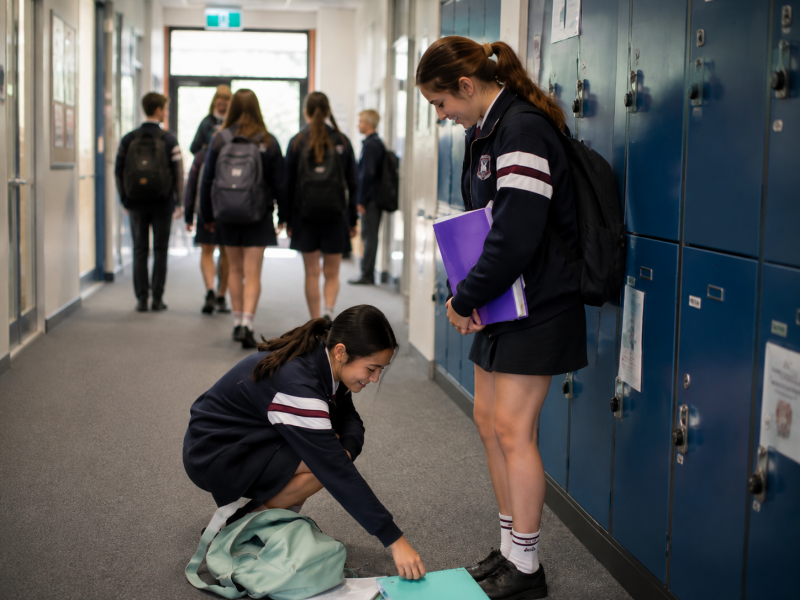
A helpful peer can solve the immediate problem so successfully that adults never see the gap underneath it.
When One Child Becomes Part of Another Child’s Support Plan
Peer reliance does not only happen with practical tasks.
Sometimes children’s social worlds become part of how adults try to create inclusion.
In Year Three, another girl with a disability similar to mine started at my primary school.
We were paired together.
She was extremely shy and mainly spoke to me.
Over time, I began to feel responsible for her, while some of my friendships with children in the mainstream school gradually disappeared.
We eventually went to different high schools.
Later, after she experienced bullying at her school, there was discussion about her transferring to mine.
It had already been suggested that we would share a teacher aide.
By then, I had finally settled into high school and established my own group of friends.
I told Mum that I would happily show her around if she came to my school.
But I wasn’t prepared to give up my friendships to become responsible for her again.
That was a boundary I had not known how to set when I was younger.
Having similar disabilities did not automatically mean we had the same personalities, social needs or friendship preferences.
And my own social life should not have needed to become part of another child’s inclusion plan.
Children can welcome another student.
They can help someone settle in.
They may even develop a genuine friendship.
But those things need room to happen naturally.
One child’s belonging should not become another child’s responsibility.
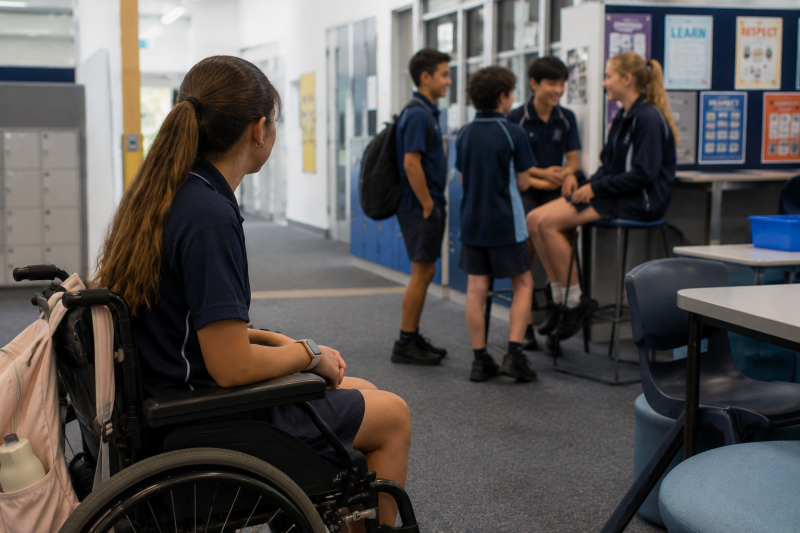
Children should not have to work out who they know well enough to ask before they can access the support they need
What Happens When the Peer Is Removed?
One of the simplest ways to examine a peer-support arrangement is to imagine that the peer is not there.
If the helpful friend is absent tomorrow, can the student still participate?
If friendships change, does their access change too?
If the buddy moves classes, is there another reliable source of support?
If students move on at the end of the year, does the inclusion remain?
Peer relationships are naturally changeable.
Support systems should be able to withstand that change.
This does not mean removing peers from inclusion.
It means allowing peer relationships to be what children’s relationships should be: voluntary, flexible and able to change.
Formal support, accessible environments and adult responsibility provide the foundation.
Peer connection can then add something valuable without being responsible for keeping that foundation standing.
If access disappears when a peer leaves, the system was relying on the peer.

I needed to be free to become classmates and friends not part of the system responsible for making my inclusion work.
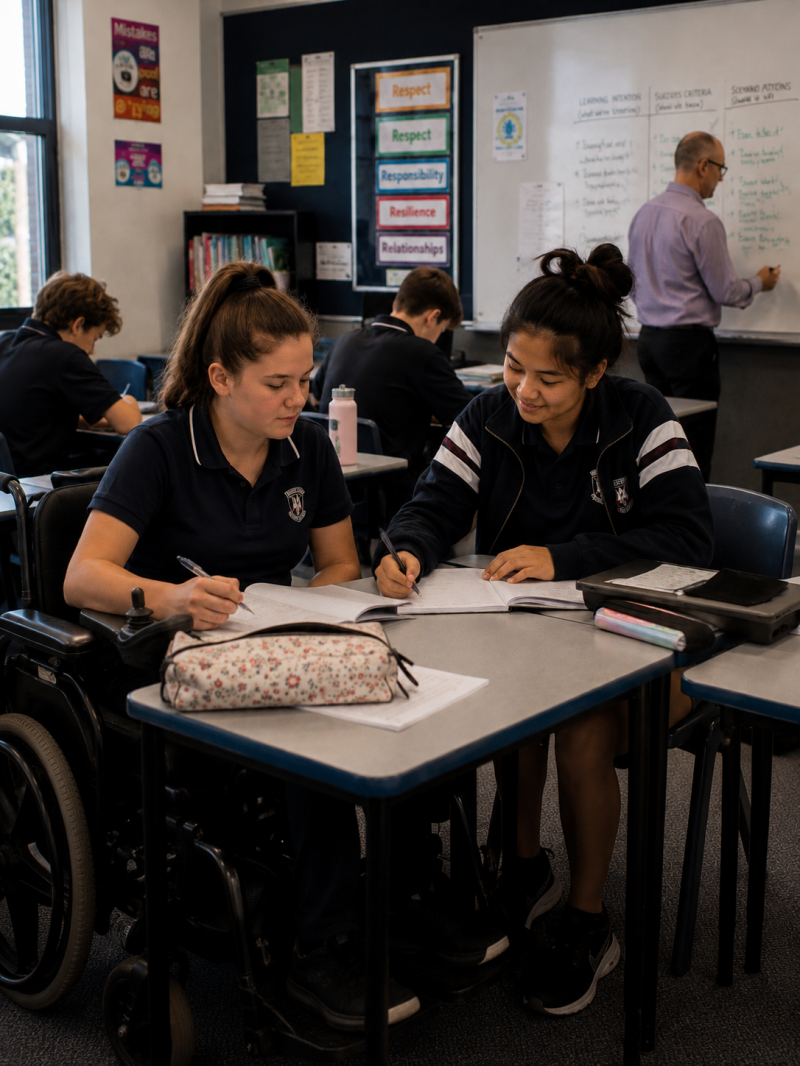
When peers become part of how essential support is provided, their absence can change whether another student feels supported at all.
Kindness Can Make the Gap Harder to See
When another child steps in and helps, the immediate problem may disappear.
The student participates.
The task gets completed.
Everyone moves on.
And because the outcome looks successful, adults may not see what was required to make it happen.
Over time, informal arrangements can become normal.
Their friends help.
Someone is usually around.
They manage.
But “managing” does not necessarily mean the support is adequate.
It may mean children have become very good at compensating for what is missing.
This is why celebrating peer kindness cannot be the end of the conversation.
We can appreciate the child who chose to help while still asking:
Why was their help necessary?
Was appropriate adult support available?
Was the environment accessible?
Could the child have participated without another student stepping in?
And if this happens regularly, has an occasional act of kindness quietly become an expectation?
We can value kindness without using it to excuse missing support.
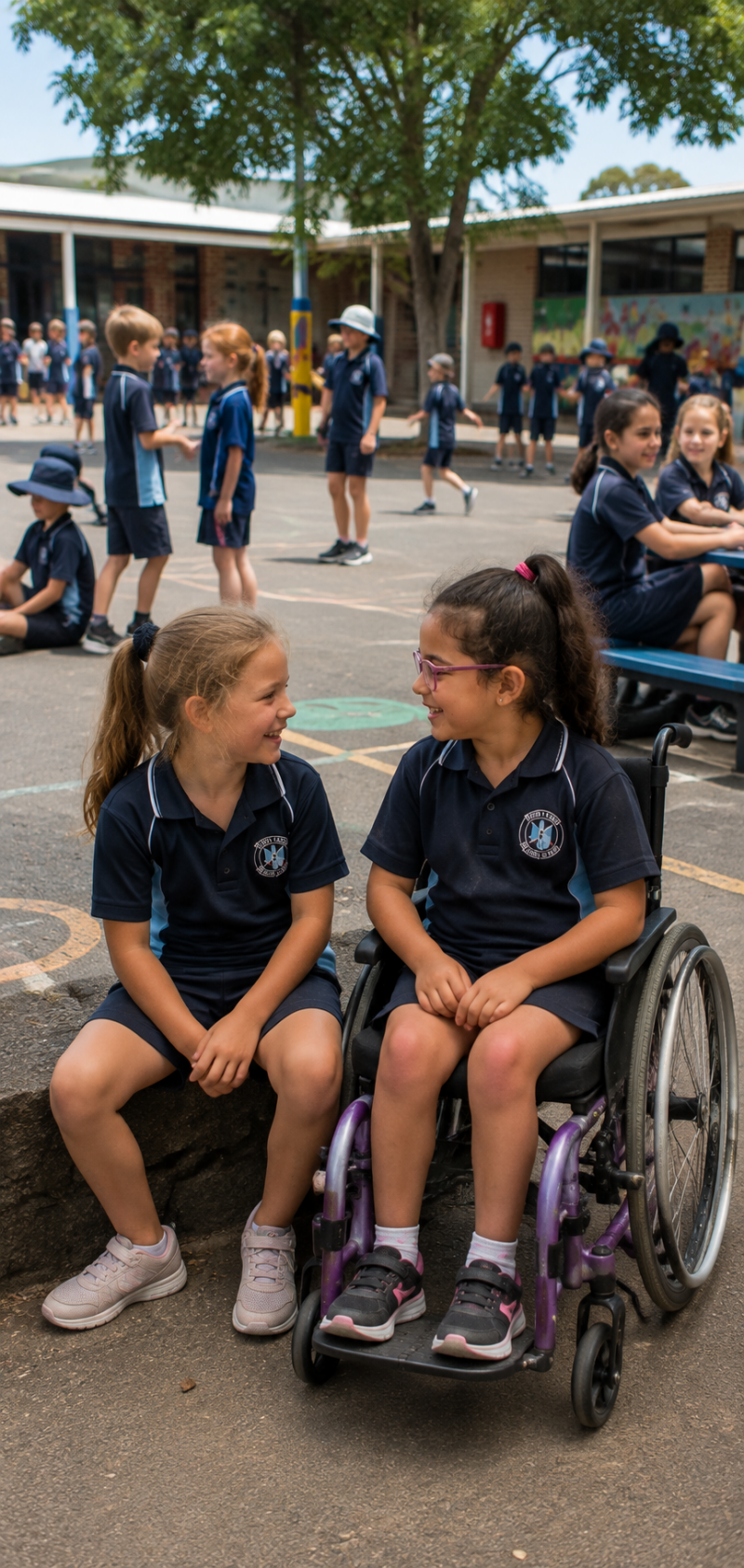
Having similar difficulties does not automatically mean two children have the same personalities, social needs or friendships preferences.
When Support Becomes Something the Child Has to Negotiate
Reliable support gives a child a degree of certainty.
They know who is responsible.
They know where assistance will come from.
They do not have to continually work out whether someone is willing to help.
When support relies heavily on peers, the child may instead have to navigate questions that have little to do with the task itself.
Who can I ask?
Will they mind?
Do I know them well enough?
Have I already asked too much?
What happens if they say no?
That adds a social negotiation to an existing support need.
For some children, the result may be that they avoid asking altogether.
They may attempt something without the support they need or miss an opportunity rather than approach another student.
A child’s access should not depend on how comfortable they are asking their peers for assistance.
The system should carry the responsibility for making essential support dependable.
Children should not have to negotiate socially for the support they need to participate.
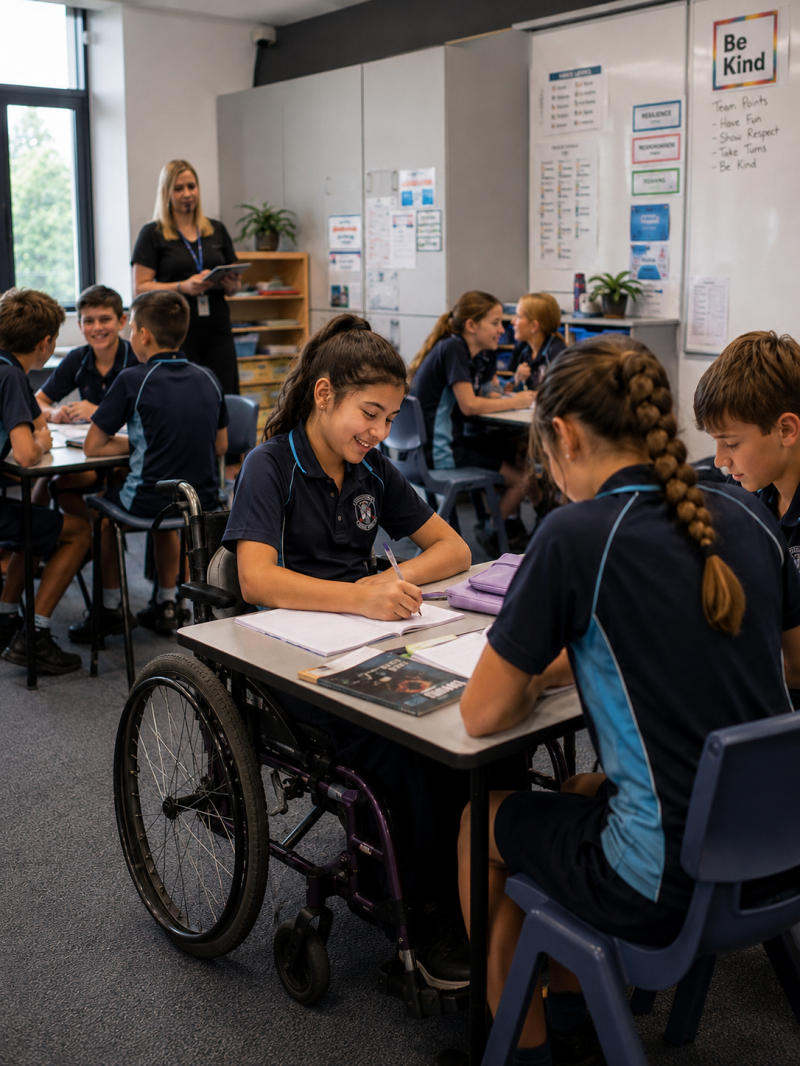
When adults and systems take responsibility for essential support, peers are free to be classmates, friends and equals.
A Reflection for Parents and Educators
There is something valuable about a school where children help one another.
We should not lose that.
Kindness matters.
Community matters.
Children learning to notice and care about other people matters.
But when a child with a disability regularly receives support from peers, it is worth looking beneath what appears to be working.
Is this peer choosing to help, or have they quietly become responsible for helping?
Would the child still have access if this peer were absent?
Is the peer adding something valuable, or providing something essential?
Does the child know where reliable support will come from?
Are we protecting both children’s freedom to develop their own friendships?
And perhaps most importantly:
Have we mistaken children solving a problem for the problem being solved?
Peer support can be part of inclusion.
But children should not be responsible for compensating for inadequate staffing, inaccessible environments or missing formal support.
The child receiving support deserves reliability without having to feel dependent on the goodwill or availability of another student.
And the child offering support deserves the freedom to be a classmate or friend without carrying responsibilities that belong to adults and systems.
This is why I created Peer Support or System Gap?, a short reflection resource to help parents, educators and support teams look more closely at peer-support arrangements. It asks a simple but important question: is peer support adding to inclusion, or is it quietly compensating for support that should already be there?
Sometimes the most inclusive thing adults can do is notice what children have quietly been making possible—and take responsibility for making sure they no longer have to.
Children can be part of an inclusive community without becoming responsible for making the system inclusive.
Add comment
Comments