How repeated assumptions about capability, intelligence, maturity and independence can affect what children with a disability begin to believe about themselves.

Children can begin carrying other people’s ideas about who they are long before anyone realises those ideas have become expectations.
When Another Child Becomes the Measure of Capability
Children with a disability are sometimes compared with other children who have similar disabilities.
The comparison can seem logical.
Adults may think another child’s experience gives them an indication of what to expect.
But two children can have different strengths, difficulties, personalities, health circumstances and ways of learning.
Growing up, I was compared with another student with a disability.
Her physical disability was more severe than mine, but academically she was naturally much stronger.
Because I struggled more with learning, some adults did not believe I was particularly smart.
The comparison created an assumption about what I was capable of.
Years later, I graduated from high school with higher results than she did.
But she had become very unwell during her final year, and that was recognised as an explanation for why her results had been affected.
It was a legitimate explanation.
What struck me was that my own circumstances had not been considered in the same way.
My dystonia was not yet part of how people understood the difficulties I had experienced with learning, my physical capacity or what I had been managing.
The point is not that my final results proved I was smarter than she was.
They didn’t.
The problem was that we had been used as measures of each other in the first place.
One child’s strengths should never become the evidence for another child’s limitations.
Another child’s strengths should never become the evidence for what this child is capable of.

When adults underestimate a child’s potential, the consequence can be more than lower expectations. It can change what adults decide is worth investing in.
When “Mature” Becomes a Role to Maintain
Not every assumption about a child with a disability sounds negative.
In high school, I was described as mature.
In some ways, I probably was.
I had to advocate for myself.
I had to communicate with adults about support and navigate situations that required me to think about things many teenagers did not have to consider in the same way.
But being seen as mature also became complicated.
I started to feel as though I needed to act mature.
And sometimes I didn’t want to be the mature person.
I wanted to be a teenager.
I wanted to connect with my peers as one of them rather than constantly feeling as though I needed to respond to situations in the way a mature person was expected to.
That could make connection harder.
Children with a disability may develop particular kinds of maturity early because of the environments they navigate.
They may become comfortable speaking with adults.
They may know how to explain their needs.
They may understand medical, educational or support systems earlier than their peers.
But maturity in one part of a child’s life does not mean they have stopped needing the freedom to be young in another.
A compliment can become an expectation when a child starts believing they must continue performing the quality adults praise.
Being mature in some situations should not require a young person to stop being young in others.

Sometimes the child everyone describes as brave has simply become very good at deciding which emotions feel safe to now.
When Coping Becomes Evidence That Everything Is Fine
When I went to mainstream high school, I expected the education to be difficult.
I did struggle with learning.
But in many ways, the emotional side of mainstream school was harder than the educational side.
I had learned to hold my emotions in.
So while I was trying to learn, I was also trying to manage how I appeared.
I came home exhausted most days.
That is something assumptions about capability can easily miss.
A child can be academically capable and still be struggling.
They can participate all day and have very little capacity left when they get home.
They can look calm while concentrating heavily on keeping themselves calm.
They can meet expectations while paying an emotional cost that nobody sees.
When adults see the successful outcome without seeing what it required, the outcome itself can reinforce the assumption:
They’re coping.
And once a child becomes known as someone who copes, it can become even harder for them to show when they aren’t.
Looking emotionally composed does not tell us how much it is costing a child to cope.

After hearing enough assumptions, children can begin measuring themselves against the version of them other people expect to see.
Children Need Room to Contradict Our Assumptions
The answer is not to replace negative assumptions with positive ones.
A child does not need to move from being labelled incapable to being labelled capable, as though either word can fully describe them.
Children are more complicated than that.
A child can be capable and need substantial support.
Mature and still need comfort.
Independent and choose assistance.
Brave and frightened.
Academically successful and exhausted.
Emotionally composed at school and overwhelmed when they get home.
They can also change.
Something that was difficult last year may become easier.
Something they managed yesterday may be beyond their capacity today.
A strength in one environment may not transfer neatly into another.
Adults need to remain curious enough to update what they think they know.
The aim should not be to decide which description fits the child best.
It should be to create enough room for the child to keep showing us who they are.
Children need room to be more complicated than the assumptions made about them.

I was capable, emotional, mature, struggling, independent and in need of support at different times. No single assumption could ever tell the whole story of who I was becoming.
When Other People Decide Who a Child Is
Children with a disability can grow up surrounded by assumptions.
Some are obvious.
They probably won’t be able to do that.
This might be too difficult for them.
Others sound positive.
They’re so mature.
They’re incredibly brave.
They’re very independent.
And sometimes assumptions are communicated without anyone saying them directly. They appear in what adults prioritise, which opportunities are offered, how much support is considered worthwhile and what kind of future people prepare the child for.
One assumption may not define a childhood.
But when children repeatedly receive messages about who they are, what they can achieve and how they should behave, those messages can begin to influence how they see themselves.
The emotional cost is not always visible immediately.
Sometimes it appears in the child trying harder to prove an assumption wrong.
Sometimes it appears in them trying to live up to a positive label.
And sometimes it appears years later, when they have become so accustomed to monitoring themselves through other people’s expectations that they no longer realise they are doing it.
Children can carry the weight of positive assumptions as well as negative ones.

Another child’s strengths can give us information. They should never become the measure of what this child is capable of becoming.
When Assumptions About Intelligence Change What Adults Prioritise
Underestimating a child’s intelligence can affect much more than academic expectations.
It can affect what adults believe is worth investing in.
Because some adults didn’t expect me to achieve much academically, there was a strong emphasis on making me more physically independent.
Education was not always treated as though it would be the part of my future that mattered most.
Physical independence was.
Nobody needed to sit me down and say:
Education is wasted on you.
Children can learn what adults believe through what receives their time, energy and attention.
When academic potential is underestimated, opportunities can narrow before the child has had the chance to show what they might eventually be capable of.
Perhaps more time is directed towards practical skills.
Perhaps academic difficulty is accepted more quickly.
Perhaps expectations become lower.
Perhaps support for learning is seen as less worthwhile than preparing the child for a future adults have already imagined.
Physical independence can be valuable.
So can practical skills.
The problem is not teaching them.
The problem is deciding that one area deserves greater investment because adults have already made assumptions about the child’s potential in another.
A child’s future has not happened yet.
Adults need to be careful about closing possibilities while believing they are simply being realistic.
When adults underestimate a child’s potential, the cost can be what they stop investing in.

A young person can be mature in the situations they have had to navigate and still need the freedom to simply be a teenager.
When an Emotional Child Becomes the “Brave” One
I was an emotional child.
As I grew older, I became much better at controlling what other people saw.
But that didn’t happen simply because the emotions disappeared.
I had been made to feel that my emotions were unwanted.
So I learned to hold more of them in.
Later, I was described as brave.
From the outside, that probably made sense.
I had gone from being a child whose emotions were visible to a young person who appeared much more able to cope.
But there can be a difference between learning how to regulate emotions and learning that certain emotions are safer not to show.
That difference matters.
A child becoming quieter when distressed does not necessarily mean they are less distressed.
A child who stops crying at school may still cry when they get home.
A child who appears composed may be using enormous amounts of energy to stay that way.
And a child who is repeatedly described as brave may begin to wonder whether fear, sadness, anger or overwhelm contradict the person everyone believes them to be.
Being called brave is not inherently harmful.
But bravery should never become another standard a child has to perform.
Sometimes what adults call bravery is a child learning which emotions feel safe to show.
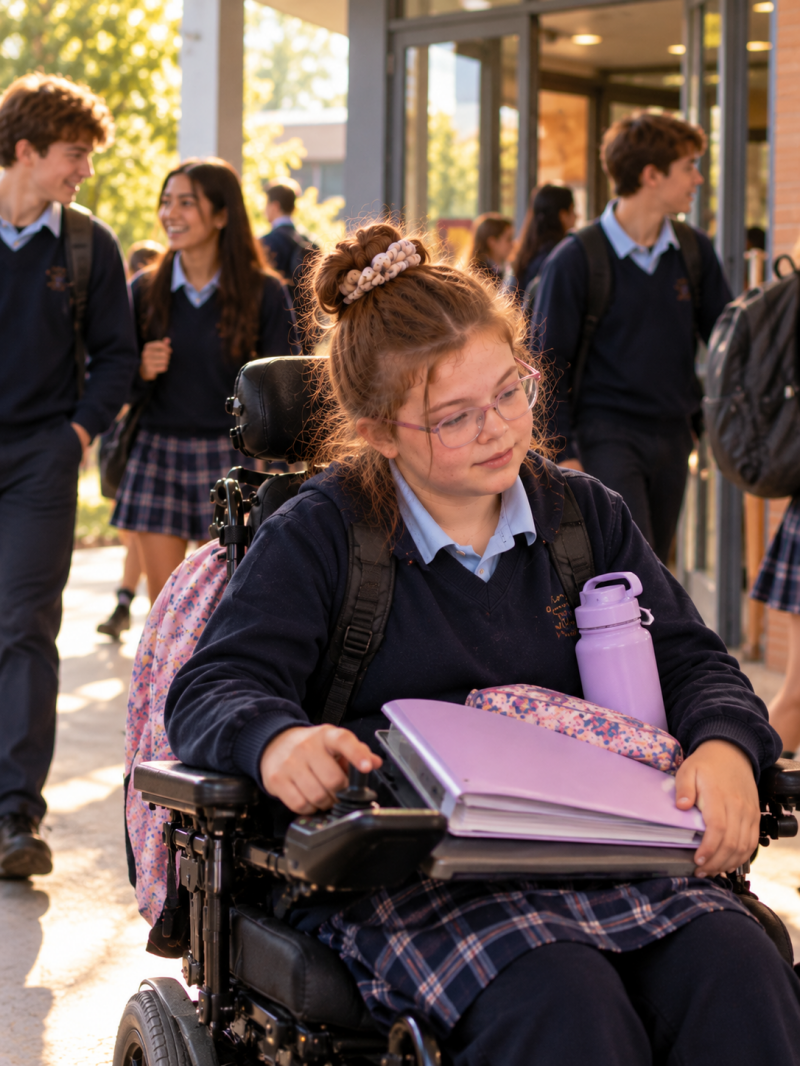
A child can make it through the school day and still have used almost everything they had to hold themselves together.
When Other People’s Assumptions Become the Child’s Expectations
The most lasting assumptions may not be the ones adults continue to say.
They may be the ones the child eventually learns to say to themselves.
A child who is repeatedly underestimated may start wondering whether there is any point trying.
Another may become determined to constantly prove people wrong.
A child praised for maturity may question whether ordinary teenage behaviour makes them immature.
A child known for bravery may feel uncomfortable showing fear.
A child repeatedly pushed towards physical independence may begin to believe needing help means they haven’t progressed enough.
And a child who is expected to cope may learn to ask:
Can I keep this together?
instead of:
Am I actually okay?
These beliefs will not develop in every child in the same way.
But children notice how adults respond to them.
They notice what earns praise.
They notice what disappoints people.
They notice which parts of themselves make adults comfortable and which parts seem harder for adults to accept.
Over time, those reactions can become part of the way children evaluate themselves.
Other people’s assumptions can become the standards children eventually use to judge themselves.
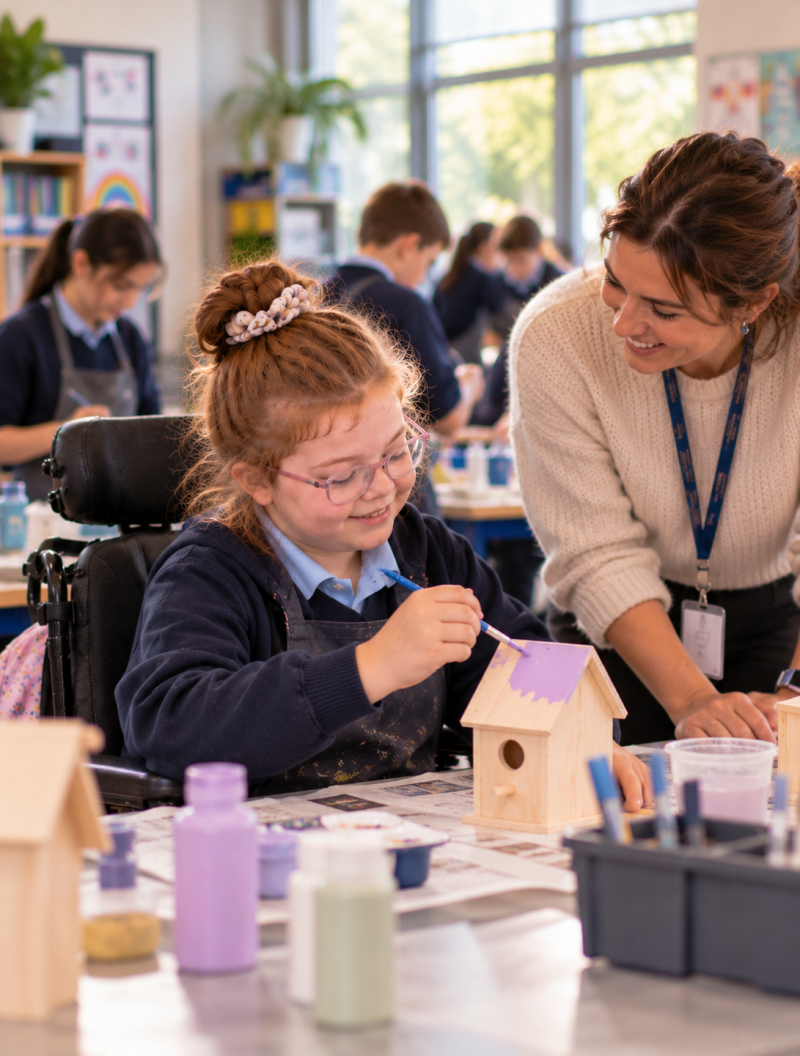
Children need room to surprise us to need d more support, need less support, struggle, succeed and change without being trapped by an old assumption.
A Reflection for Parents, Educators and Support Providers
Think about a child with a disability you know well.
What words are often used to describe them?
Capable?
Struggling?
Mature?
Independent?
Brave?
Emotional?
Now think about what happens when that child behaves in a way that does not fit the description.
Can the capable child ask for help without people questioning why they need it?
Can the child who struggles be given opportunities that exceed what adults currently expect?
Can the mature teenager behave like a teenager?
Can the independent child choose support?
Can the brave child say they are frightened?
Can the emotional child express distress without the emotion becoming the problem?
Sometimes the most important question is not whether an assumption is positive or negative.
It is what that assumption begins to change.
Does it affect what opportunities are offered?
What support is provided?
How much time is invested in learning?
What adults expect the child to cope with?
What the child begins to feel they have to prove?
And what parts of themselves they may start hiding?
Children will inevitably be described and interpreted by the adults around them.
But those descriptions should never become fixed identities.
Adults need to remain willing to be surprised.
To notice when new information does not fit the old story.
To ask questions rather than automatically explain the contradiction away.
To recognise that capability can sit alongside struggle, maturity alongside vulnerability, and independence alongside significant support.
This is why I created What Are We Assuming?, a reflection resource for parents, educators and support providers. It is designed to help adults separate what they actually know about a child from what they may have assumed, and to notice how those assumptions might already be shaping expectations, opportunities and support.
Because sometimes the most important shift is not asking the child to prove something different.
It is asking ourselves whether we have left enough room to see something different.
Children should have room to discover who they are without carrying the weight of who other people have already decided they should be.
Add comment
Comments