Peer support can build understanding, confidence and genuine connection. But as children grow, helping needs to remain a choice rather than quietly becoming a responsibility.
Peer Support Can Open a Door
Peer support can be one of the most valuable parts of inclusion.
Children learn things from each other that adults cannot always teach through explanations, awareness activities or carefully planned lessons.
They learn how someone communicates.
They discover what makes them laugh.
They find shared interests.
They become more comfortable asking questions.
And disability can gradually become one part of a person they know, rather than the first thing they notice about someone they do not.
Peer support can benefit the child with a disability, but it can also benefit their peers. It can build confidence, understanding and familiarity with difference.
The difficulty begins when adults see those benefits and assume that more peer responsibility must create more inclusion.
Sometimes it does.
Sometimes it changes the relationship entirely.
Peer support can open the door to connection. It should not decide what the relationship has to become.
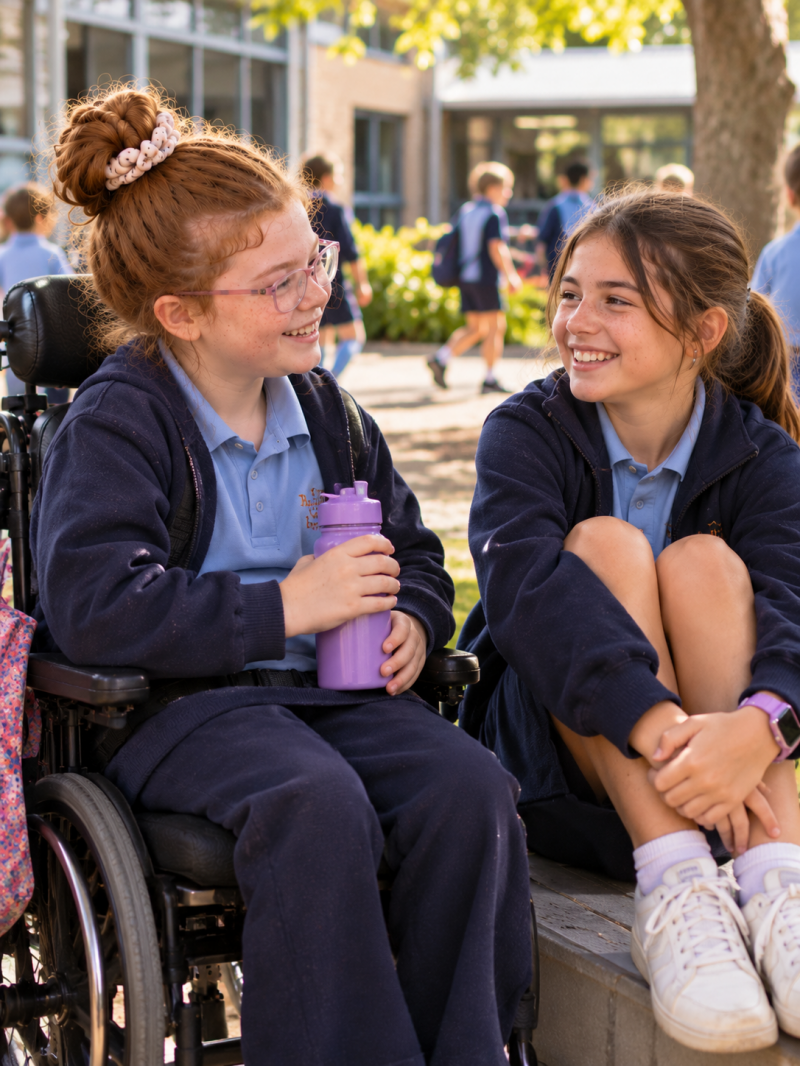
Sometimes an arrangement that begins with helping creates enough time and familiarity for genuine friendship to grow.

Peer support can create something valuable: the opportunity for children to move from noticing disability to getting to know the person.
When Helping Creates the Opportunity to Know Someone
In primary school, I was mainstreamed for some lessons.
I did not have a teacher aide with me, so I was paired with other students who could help me.
Something important happened.
The relationships did not stay inside the classroom.
Some of those children started looking for me at recess and lunch. We became friends.
The support had created an opportunity for us to spend time together, but eventually there was more holding the relationship together than the role they had originally been given.
They knew me.
I also think age mattered.
Younger children can be excited about having a role and being trusted to help. As children grow, however, they naturally begin wanting more freedom over where they go, who they spend time with and how their friendships develop.
That does not mean peer support suddenly becomes inappropriate.
It means the way we use it needs to grow with the children.
A support arrangement can introduce two children. Friendship needs room to become something more.
When Helping Becomes Someone’s Responsibility
I experienced the other side of this in Year Three.
Another girl with a disability joined my class. She was very shy and mostly spoke to me, so adults paired us together because they thought I could help her.
I understood why.
We shared some experiences, and I was someone she felt comfortable with.
But over time, I began to feel responsible for her.
That changed things.
Instead of simply being another child she knew, I became an important part of how she managed socially. At the same time, I was trying to develop my own friendships with children in the mainstream class.
This is where peer support can become complicated.
A child may genuinely care about another child.
They may want to help.
They may even enjoy helping.
But when one child’s participation, confidence or belonging begins depending heavily on another child, kindness can quietly become responsibility.
The child may start feeling that walking away, choosing another friend or simply wanting to do something different means letting someone down.
Helping starts to cost when saying no no longer feels like a real option.
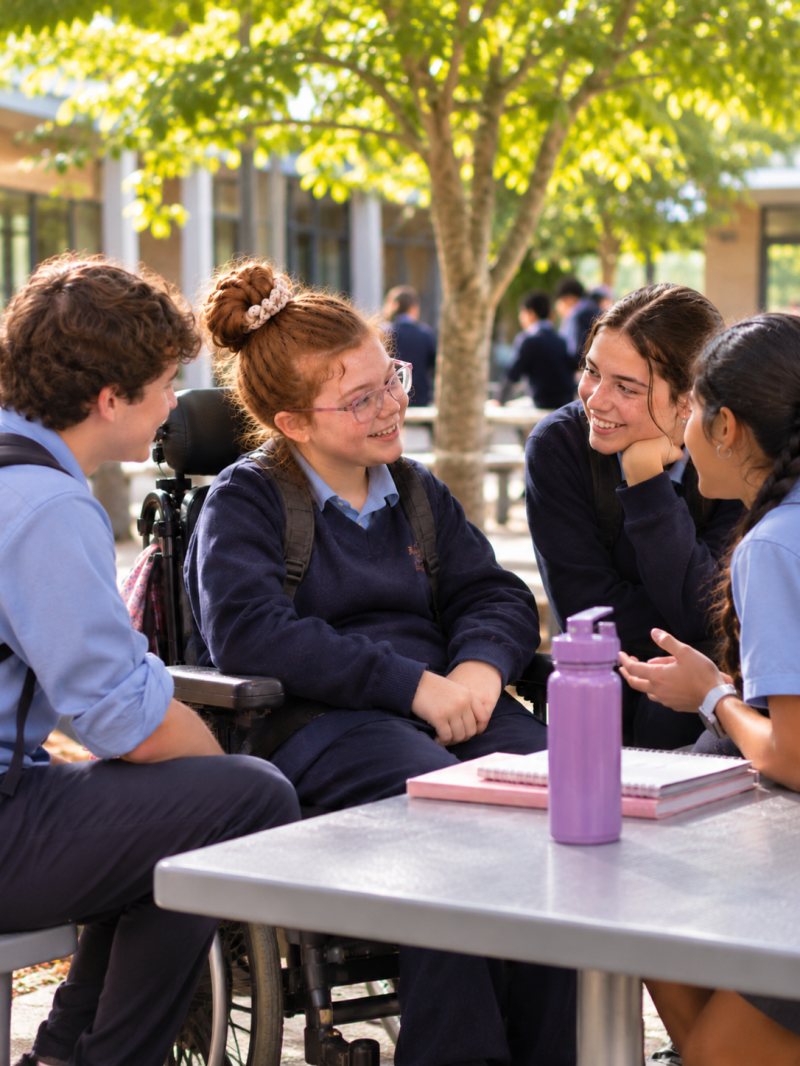
Understanding disability can grow through ordinary time together and learning how someone communicates, what they enjoy and who they are beyond their support needs.
Inclusion Also Needs Relationships That Nobody Assigns
Structured peer support can create opportunities for children to become comfortable with each other.
But it cannot manufacture friendship.
Some relationships need the freedom to happen without adults organising them.
There was another girl at high school who was not part of my peer-support group.
We talked in class.
Eventually, she asked for my phone number.
Then we started planning to go to an amusement park together.
There was no assigned role behind that relationship.
She had not been asked to include me.
We had simply spent enough time talking to discover that we wanted to spend more time together.
That is one of the outcomes we should be hoping for when we talk about inclusion.
Not that every child with a disability has a designated group of students around them.
But that the environment becomes comfortable enough with disability that ordinary relationships have room to form.
Peer support can help create that environment.
Then adults sometimes need to move out of the way.
Belonging becomes more meaningful when children have the freedom to choose each other.
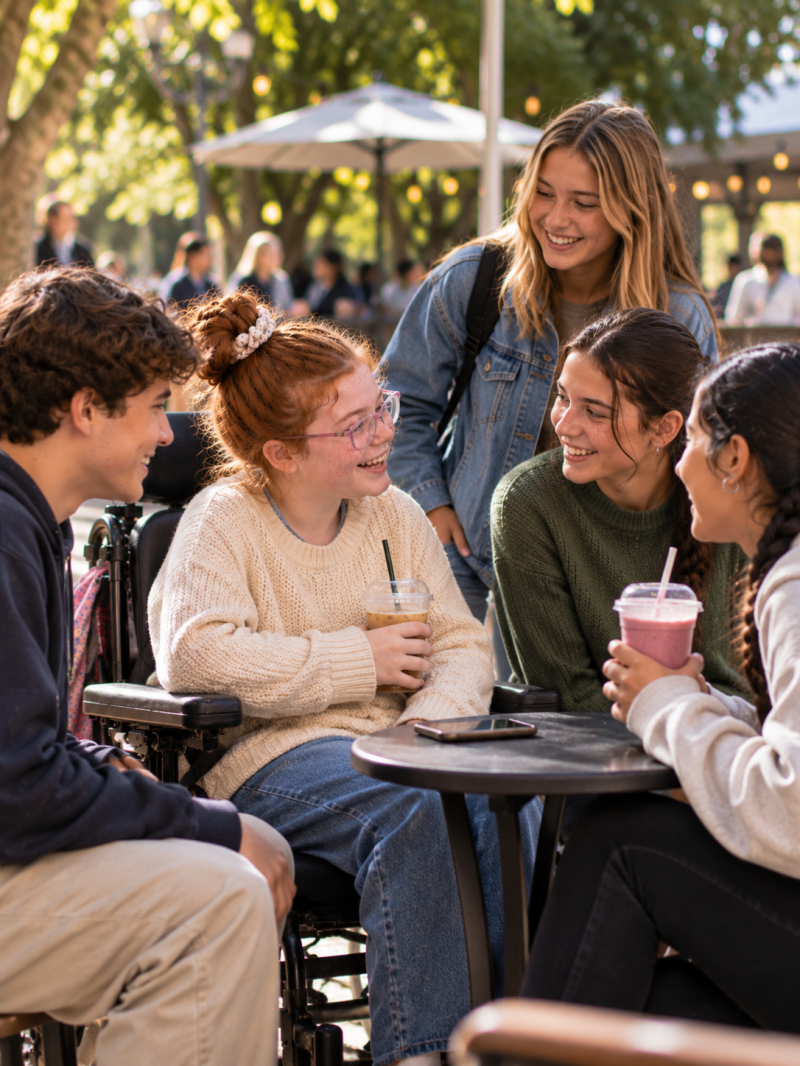
As children grow, peer support needs to leave more room for privacy, changing friendships and the freedom to choose who they spend time with.
Sometimes Helping Is Simply What Friends Do
Not every act of peer support needs to make us concerned about responsibility.
Sometimes friends help each other because they care.
I had private transport that took me to school, and my teacher aide was often late.
One of my friends would come and talk to me while I waited instead of immediately going to join my other friends.
She did not have to do that.
She chose to.
I think that distinction is important when we talk about protecting children from too much responsibility.
We do not want to become so cautious about peer support that ordinary acts of friendship start being treated as a problem.
Friends wait for each other.
They help each other.
They change plans sometimes.
They notice when someone needs something.
A child choosing to stay with a friend is very different from a child believing they cannot leave because nobody else will take responsibility.
One comes from the relationship.
The other comes from the weight placed on it.
“I want to stay with my friend” is very different from “I have to stay because otherwise nobody will.”
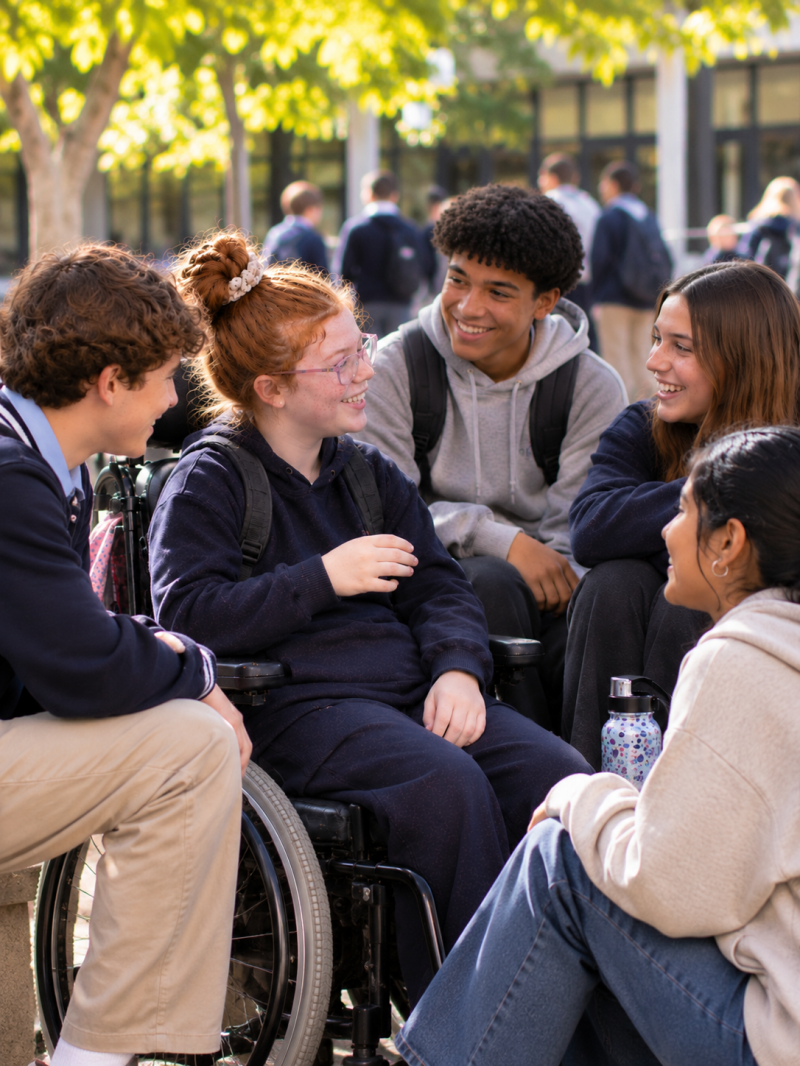
The goal isn’t less peer support. It is support that creates understanding, expands relationships and gives both children more freedom as they grow.
A Reflection for Parents, Educators and Support Providers
Think about the peer support happening around a child with a disability.
How did it begin?
Was another child asked to help?
Did that support create familiarity?
Have the children begun to understand each other’s personalities, interests and ways of communicating?
Has something that started as an arrangement developed into a genuine relationship?
Peer support can create opportunities that adults cannot always manufacture.
It can give children time to become comfortable with disability.
It can replace uncertainty with familiarity.
It can allow children to discover shared interests, humour and personality that might never have been noticed from a distance.
But something working well does not mean it should stay exactly the same.
Children grow.
Friendships change.
Social worlds become bigger.
Privacy becomes more important.
And teenagers increasingly want to decide for themselves who they spend time with and what their friendships look like.
So perhaps the question is not only:
Is this peer support working?
But also:
Has it been allowed to grow with the children?
Can both children spend time with other friends?
Can an assigned relationship become an ordinary friendship without adults continuing to structure it?
Can a peer who once enjoyed helping step back without feeling guilty?
Does the child with a disability have opportunities to form relationships with people who have never been assigned to support them?
And if one child no longer wants the same role, are adults ready to change the arrangement rather than interpreting that change as a failure?
This is why I created Growing Peer Support, a reflection resource for parents, educators and support providers. It is designed to help adults look at what peer support is creating, whether the relationship has begun to outgrow the original arrangement, and how support can change as children need greater choice and social freedom.
Peer support should not only be reviewed when something goes wrong.
Sometimes it needs to change precisely because something has gone right.
The children know each other now.
They have grown.
Their friendships have changed.
And they may no longer need adults to hold the relationship in the same shape it started in.
The goal is not to stop children helping one another.
It is to make sure that support creates more possibilities for connection as children grow, not fewer possibilities for freedom.
Peer support works best when it is allowed to grow with the children it was designed to connect.
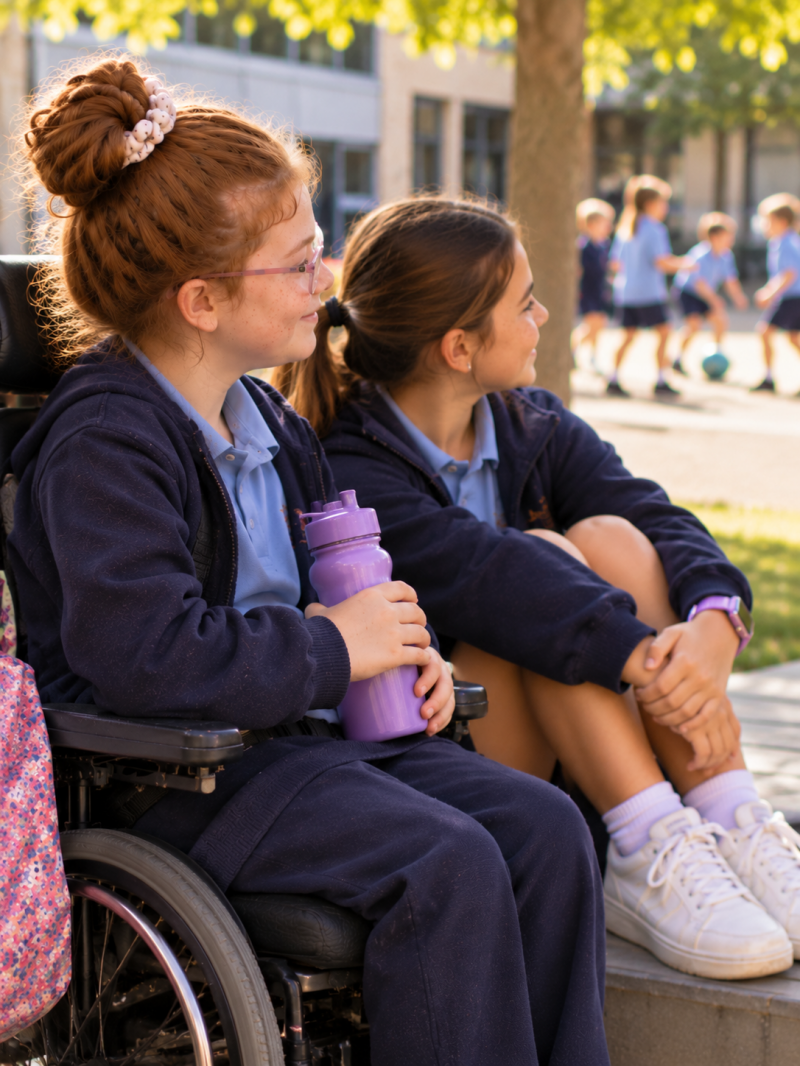
Helping can begin with kindness and still become too much when one child starts feeling responsible for another child’s belonging.
Peer Support Can Help Children Understand Disability
There is another reason I do not think the answer is to move away from peer support.
It can help children understand disability through experience rather than assumption.
My first few months of high school were extremely difficult.
I had entered a mainstream high school where students did not know me. They had to work out how I communicated, how to interact with me and what having me in their school community actually looked like.
That understanding did not happen immediately.
But as some students spent more time around me, they became curious about who I was.
They learned about my interests.
My personality.
The things I liked talking about.
We talked about the ordinary things teenagers talk about.
Not all of those relationships became deep friendships. Looking back, some remained quite superficial. I also think having my teacher aide constantly present affected how much some students truly trusted me socially.
But something had still changed.
I was no longer only the student with a disability they did not know how to approach.
About a year later, at a school event, one of the girls who had been part of the peer-support group asked me to spend time with her.
I remember how happy that made me.
She wasn’t simply fulfilling a role.
She was choosing to spend time with me.
That distinction matters.
Sometimes understanding disability begins with having enough time to know the person beyond it.
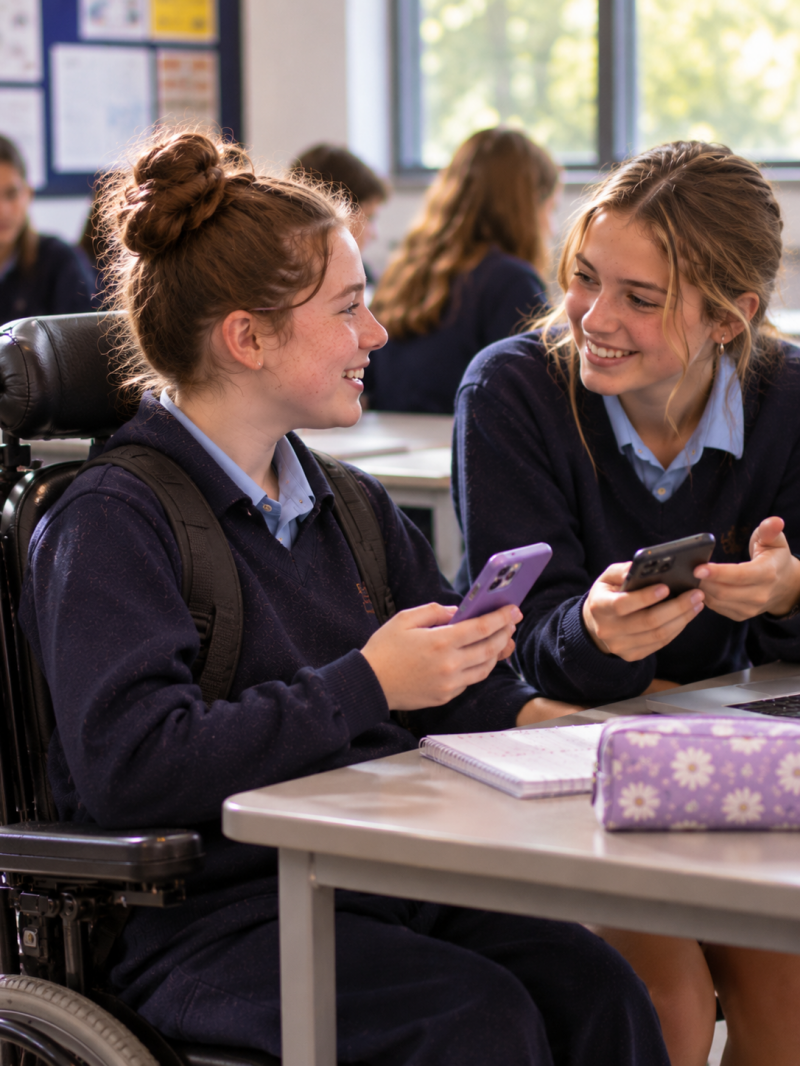
Some of the most meaningful relationships begin when nobody has been asked to include anyone, they simply discover that they want to know each other.
Growing Up Changes What Peer Support Needs to Look Like
What works for younger children will not necessarily work in exactly the same way for teenagers.
As children grow, friendships become more complex.
They want privacy.
They move between friendship groups.
They make plans independently.
They share secrets.
They sometimes want to spend time with one person rather than another.
And they increasingly want control over their own social identity.
That matters for the child with a disability and for their peers.
A peer-support arrangement that once felt exciting can begin feeling restrictive if a young person is expected to sit with the same person, accompany them everywhere or continually make sure they are included.
The child with a disability can also feel the difference between someone spending time with them because they want to and someone being expected to.
Adolescence should create more choice within relationships, not less.
As children grow, peer support needs to grow from assigned helping towards greater social freedom.
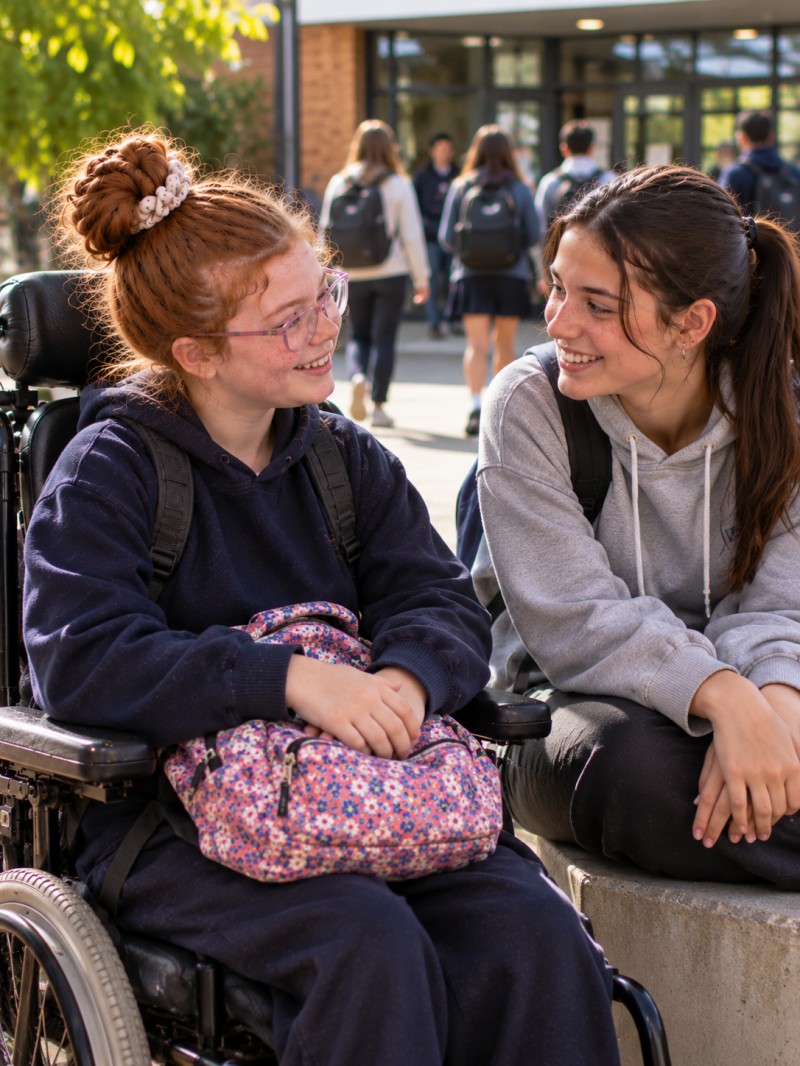
Sometimes staying, waiting or helping isn’t a support role at all. It is simply something a friend has chosen to do.
The Goal Isn’t to Remove Peer Support
There can be a temptation to solve the risks of peer support by keeping children away from support roles altogether.
I do not think that is the answer.
If we remove every opportunity for children to help one another because we are afraid of creating responsibility, we can also remove opportunities for understanding.
Children need experiences of disability that are not limited to adults explaining disability to them.
They need opportunities to communicate with people differently.
To become comfortable around different support needs.
To discover shared interests.
To learn when help is useful and when it is not wanted.
And, importantly, to discover that a child with a disability has something to contribute to the relationship too.
The safeguard should not be less connection.
It should be adult responsibility around that connection.
Adults should notice when the same child is always helping.
They should make sure a child’s access does not depend on whether a particular friend is available.
They should check whether both children still want the arrangement.
And they should create enough opportunities for the child with a disability to develop relationships beyond the peers originally assigned to them.
Peer support should expand a child’s social world.
It should not make that world dependent on a few children carrying it.
The purpose of peer support should be to create more possibilities for connection, not more responsibility for children.
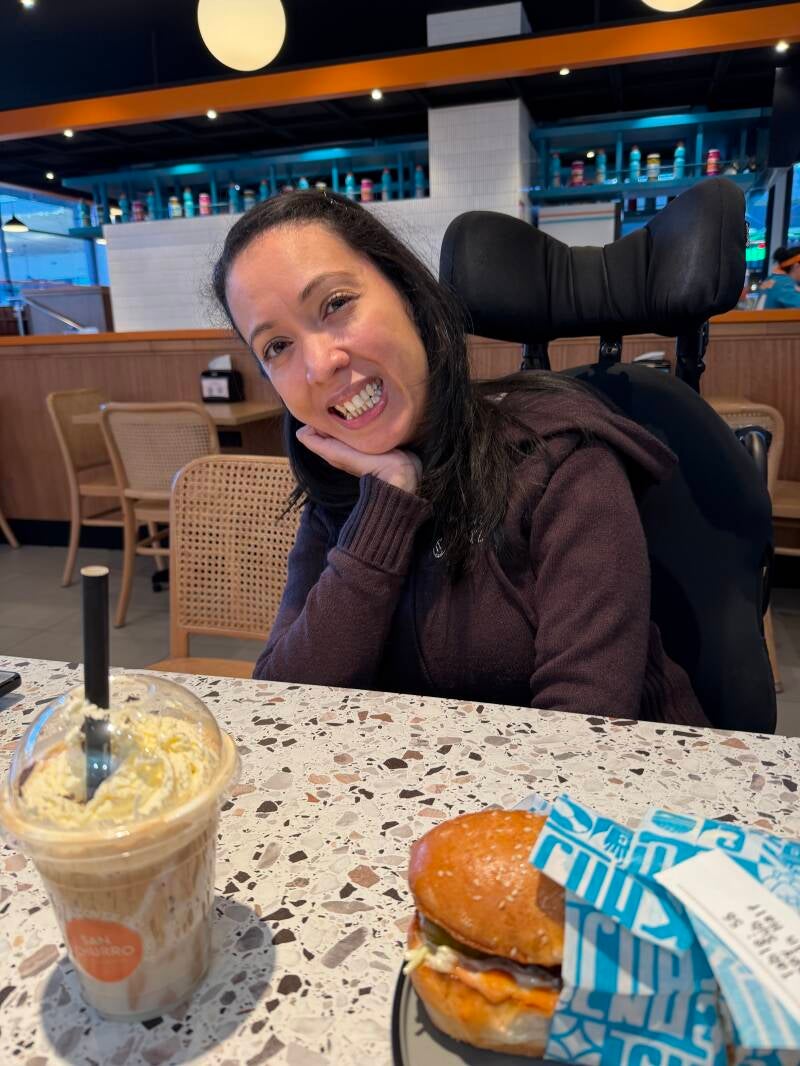
Peer support gave some students the opportunity to know me. What mattered most was when those relationships had enough freedom to become about my personality, my interests and whether we actually chose each other.
Add comment
Comments