Inclusion is shaped by more than the support we provide. It is also shaped by what we believe about disability, capability and belonging.
Every Inclusion Decision Begins With a Belief
Inclusion is often discussed through what we can see.
The adjustments made.
The support provided.
The accessibility of the environment.
The opportunities a child is given.
But underneath those decisions are beliefs.
Beliefs about what a child should be able to do independently.
What support they should need.
What they are capable of achieving.
Who should help them.
And what belonging should look like.
Sometimes those beliefs are obvious.
Other times, they are so familiar that nobody thinks to question them.
A child can therefore be physically included while still being surrounded by assumptions that limit how they are seen.
Changing inclusion is not only about changing what we do.
Sometimes it begins by examining what we believe.
The way we understand disability shapes the inclusion we create.
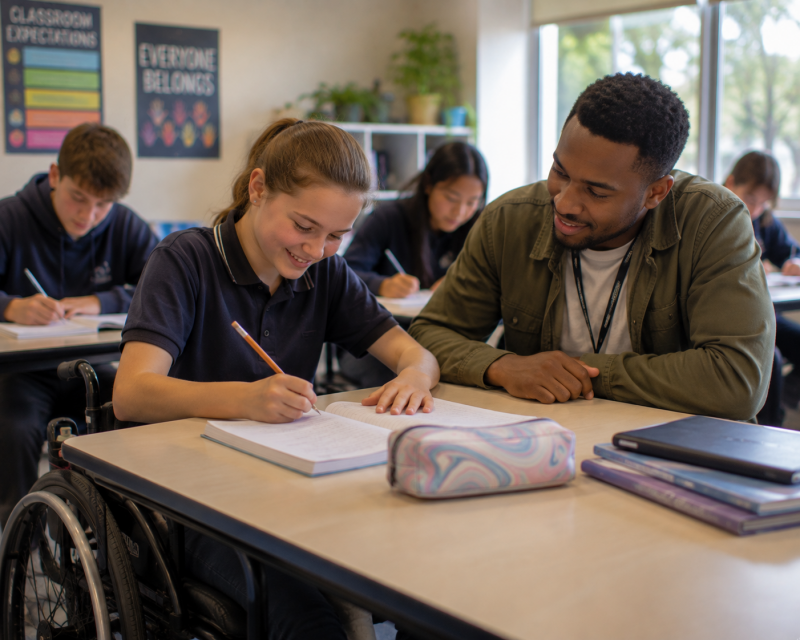
Equity creates access without depending on someone else’s kindness.
Deficit Thinking Changes Expectations
When adults primarily notice what a child cannot do, support needs can quickly become assumptions about potential.
The child who needs more time may be considered less capable.
The child who communicates differently may be assumed to understand less.
The child who needs physical support may be given fewer opportunities to make decisions independently.
Eventually, what a child needs help with can begin shaping what adults believe they will ever achieve.
I experienced this growing up.
Because it sometimes took me longer to understand new concepts, there were adults who did not expect me to have a particularly bright future.
They could see the additional time I needed.
What they could not yet see was what might become possible once I had that time, the right support and opportunities to keep learning.
Children should not have their futures predicted by the things they find difficult today.
Support needs tell us something about what a child needs.
They do not tell us everything about who that child can become.
Needing more time should never become a prediction of potential.
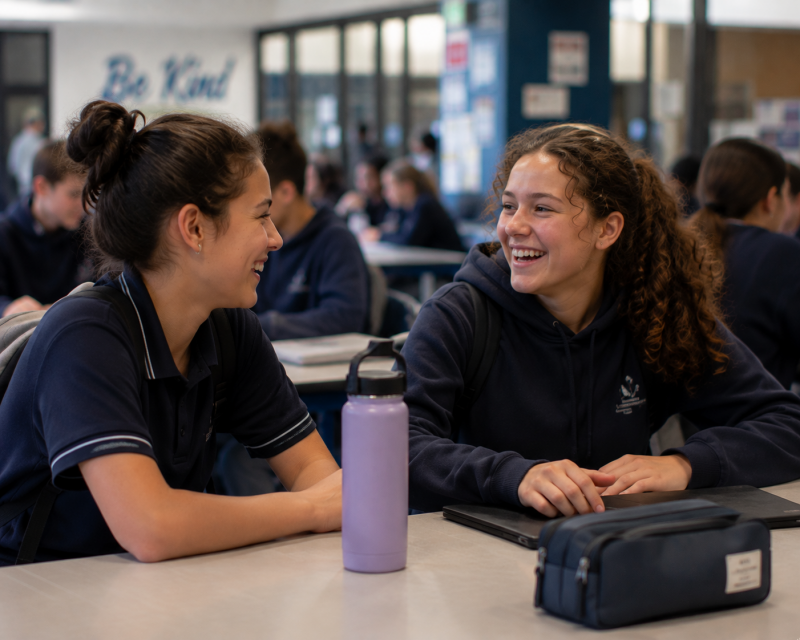
Sometimes friendship is simply friendship.
What Changes When Someone Believes Differently
Beliefs can limit opportunities.
But they can also expand them.
When I was in Year Six, there were people who believed I would be better off attending a school that was specifically able to accommodate my disability.
My teacher saw something different.
He believed I should have the opportunity to attend a mainstream high school and see what I could achieve there.
He went above and beyond to help my parents make that possible.
He could not know exactly how high school would turn out.
Neither could I.
What mattered was that he did not allow assumptions about my disability to decide the answer before I had the opportunity to try.
Children need adults who can recognise support needs without allowing those needs to become the limits of what they imagine for them.
Sometimes possibility begins when one person questions an assumption.
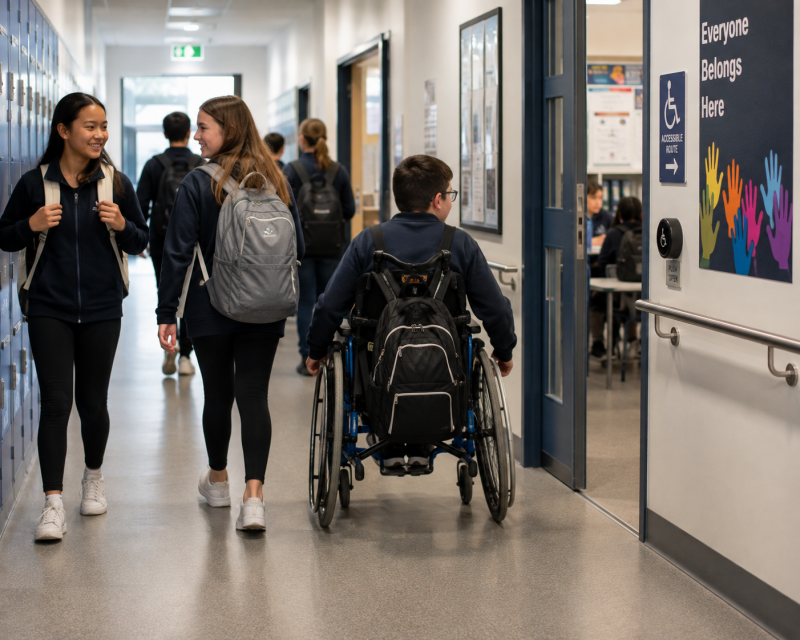
Inclusion should remain possible even when the people around a child change.
A Reflection for Parents and Educators
When we think about inclusion, we often begin with practical questions.
What support does this child need?
What adjustment should we make?
Who can help?
How can we make this activity accessible?
Those questions matter.
But perhaps there is another question worth asking first:
What do I believe about the child in front of me?
Do I see support as something they should be grateful to receive, or something that creates equitable access?
Do I see what takes them longer, or am I also looking for what becomes possible when they are given enough time?
When I see a kind friendship, am I recognising mutual connection or mainly noticing what one child does for the other?
And when something is difficult, do I automatically assume the child needs to change, or am I willing to question the environment around them?
These are not always comfortable questions.
But examining our beliefs is part of examining our practice.
To help with that reflection, I have created a companion resource, The Inclusion Belief Check.
It is designed to help parents, educators and support providers look beneath everyday decisions and consider the assumptions that may be influencing them — particularly around capability, independence, support, friendship and belonging.
Because children experience more than the strategies we put in place.
They experience our expectations.
Our assumptions.
The opportunities we offer.
And the possibilities we are prepared to imagine for them.
Lasting inclusion therefore requires more than goodwill.
It requires systems that provide equitable access and adults willing to keep questioning the beliefs that shape the decisions within them.
Lasting inclusion begins when belonging stops being something a child has to earn.

Inclusion is shaped by what adults believe about the child in front of them.
Charity and Equity Are Not the Same
There is an important difference between helping a child and creating an environment in which they have equitable access.
Charity asks:
Who is willing to help this child?
Equity asks:
What does this child need in order to participate?
The first can depend heavily on goodwill.
A particularly understanding teacher.
A kind classmate.
A family willing to keep advocating.
Someone prepared to go beyond what is expected.
Those people can make an enormous difference.
But a child’s access should not depend on finding them.
Kindness has an important place in schools.
So does generosity.
But neither should be required to compensate for support that should already exist.
Kindness can support inclusion. It should never have to provide it.
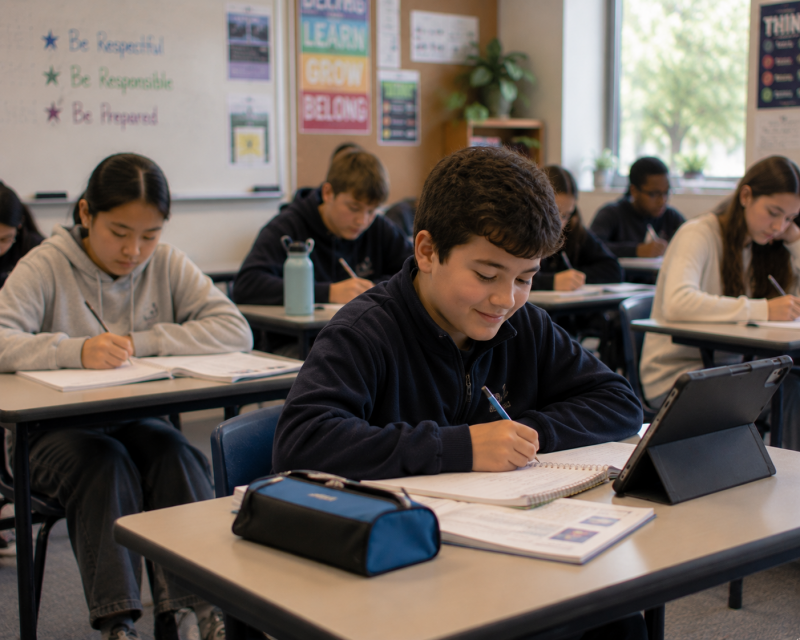
Taking longer to learn something does not tell us what a child can eventually achieve.
When Helpfulness Becomes the Measure of Inclusion
Beliefs about disability can also shape how adults understand children’s relationships.
When a child with a disability has a kind friend, adults may notice what that friend does.
Who waits.
Who carries something.
Who explains.
Who helps.
Who makes sure the child is included.
Those things can be part of friendship.
But they are not the whole relationship.
There may also be shared jokes.
Arguments.
Common interests.
Trust.
Understanding.
Two children simply enjoying each other’s company.
When adults focus primarily on helpfulness, a friendship can start to look like something one child provides for another.
That can also create an expectation of gratitude.
A child with a disability may be expected to feel fortunate that somebody included them, sat with them or wanted to be their friend.
But friendship is not a favour.
Neither is belonging.
Children should be able to experience both without feeling that they owe something in return.
Belonging should not be measured by how grateful a child is to receive it.
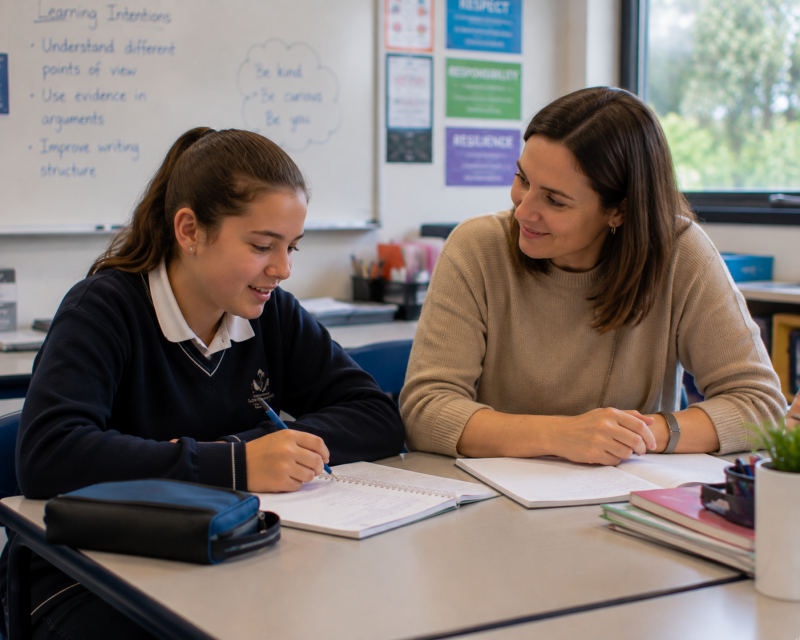
What adults believe is possible can shape the opportunities children receive.
Belief Is Not Enough Without Systems
One person believing in a child can change a great deal.
But inclusion cannot depend on finding that person.
When I went to high school, the education department initially refused to provide me with a full-time teacher aide because I had not had one in primary school.
But high school was a different environment.
Different classrooms.
Different expectations.
Different social demands.
Different support needs.
What I had managed without in one environment did not automatically determine what I would need in another.
That experience taught me something important about inclusion.
An individual can believe in a child’s potential and open a door.
But the systems around that child still determine how accessible it is to walk through it.
Genuine inclusion cannot depend entirely on exceptional teachers, persistent families, kind classmates or individual goodwill.
Those things matter.
But systems need to carry responsibility too.
Good people can open doors. Inclusive systems make sure they stay open.
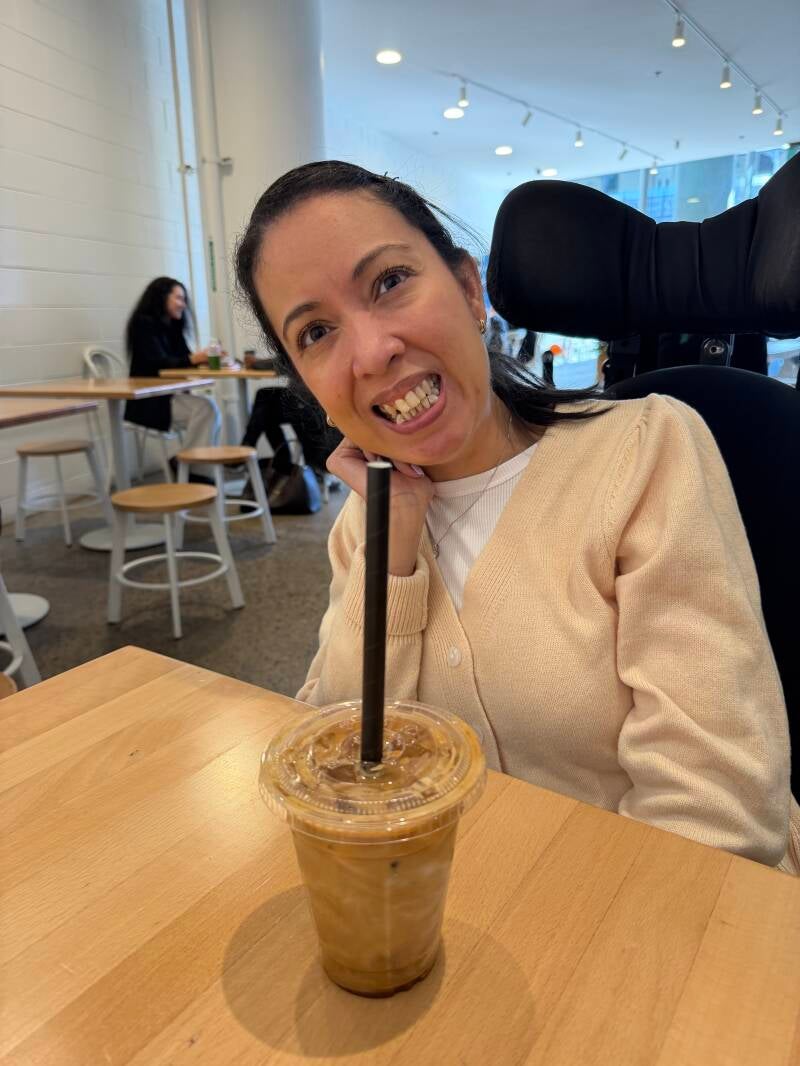
The beliefs people held about me sometimes limited what they expected.
Others created opportunities to find out what was possible.
Add comment
Comments