Puberty does not only change a child’s body. It can change what they need from school, how support feels and how important privacy, dignity and choice become.

Growing up can change how a young person experiences school.
Support Can Feel Different as Children Grow
Young children often receive help with everyday tasks without thinking much about who is providing it.
As they grow older, that can change.
A teenager may become much more conscious of receiving assistance with:
Personal care.
Eating.
Clothing.
Toileting.
Moving around the school.
Communication.
Or managing their body.
The practical need for support may not have changed.
But the experience of receiving it has.
A young person may care deeply about who provides that support.
Whether their friends can see.
Where it happens.
What is said about it.
And how much control they have over the process.
Sometimes growing independence is interpreted as needing less support.
But growing up can also mean wanting more choice within the support that remains necessary.
Growing independence should include greater choice over how support is provided.
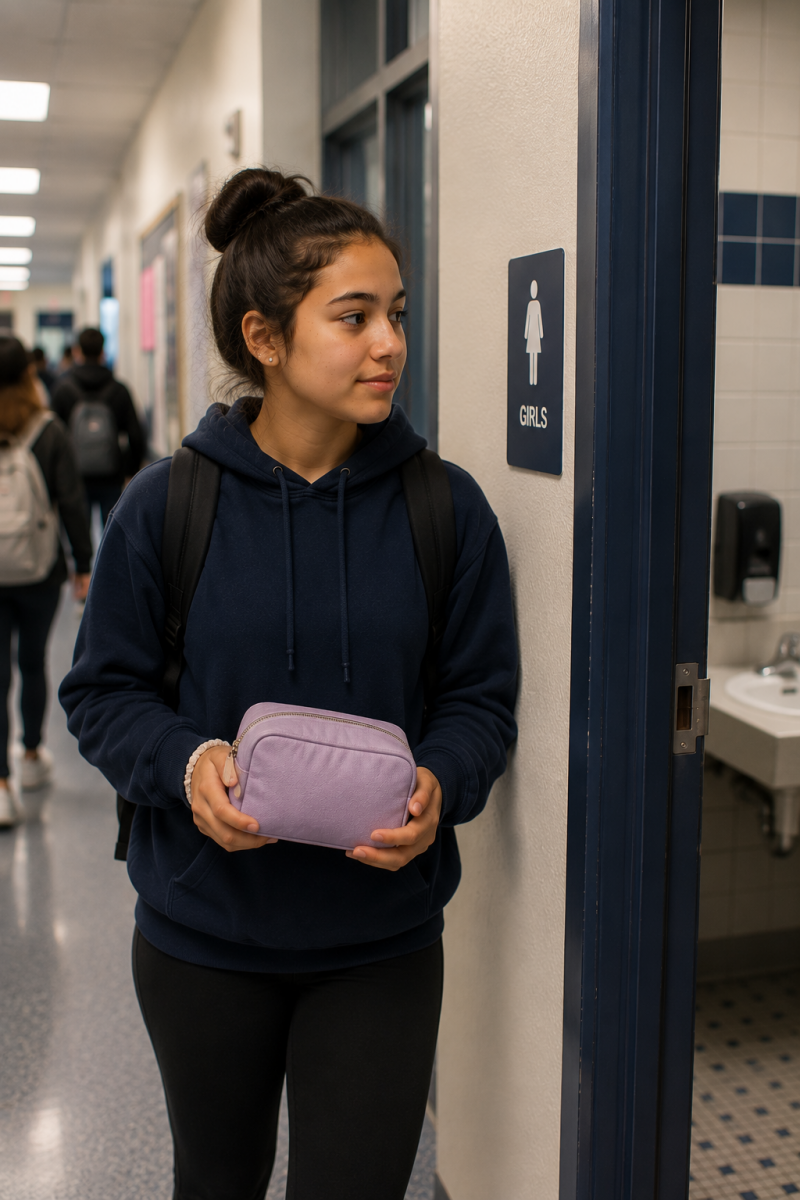
Personal care at school is also about dignity, communication and trust.
Independence Should Not Mean Withholding Help
Puberty often happens at the same time adults begin expecting greater independence.
That is an important part of growing up.
Children need opportunities to develop skills.
Make choices.
Take greater control.
And do more for themselves where possible.
But independence needs to reflect the individual young person.
At one point, I was told that I needed to learn to change my own pad.
The problem was that physically, the task was beyond my capabilities.
Wanting me to become more independent did not change what my body could do.
There is an important difference between giving a young person opportunities to learn and expecting them to perform a task without assistance simply because they are getting older.
Some young people may learn to complete a task independently.
Some may find an adapted way of doing it.
Some may always require physical assistance.
None of those outcomes determines how independent they are as a person.
Independence can also mean knowing what support you need.
Being able to ask for it.
Having a say in who provides it.
And having your choices respected.
Independence is having greater control over your life, not having to do everything without help.

Growing up changes what young people talk about—and what feels private.
Schools Need to Grow With the Child
Support should not remain unchanged simply because it worked when a child was younger.
As children move through puberty and adolescence, schools may need to reconsider:
How personal care is provided.
Who provides it.
Where it happens.
How privacy is protected.
How pain and fatigue affect participation.
Whether the young person understands what support arrangements are in place.
How information is communicated between school and home.
And whether expectations around independence still reflect the young person’s actual capabilities.
The young person should increasingly be part of those conversations.
They should have opportunities to say:
I still need help with this.
I want to try doing this myself.
I don’t feel comfortable with this person helping me.
I need more privacy.
Something has changed.
Growing up should give young people a greater voice in their support.
It should not mean adults simply assume they need less of it.
Support should develop alongside the child receiving it.
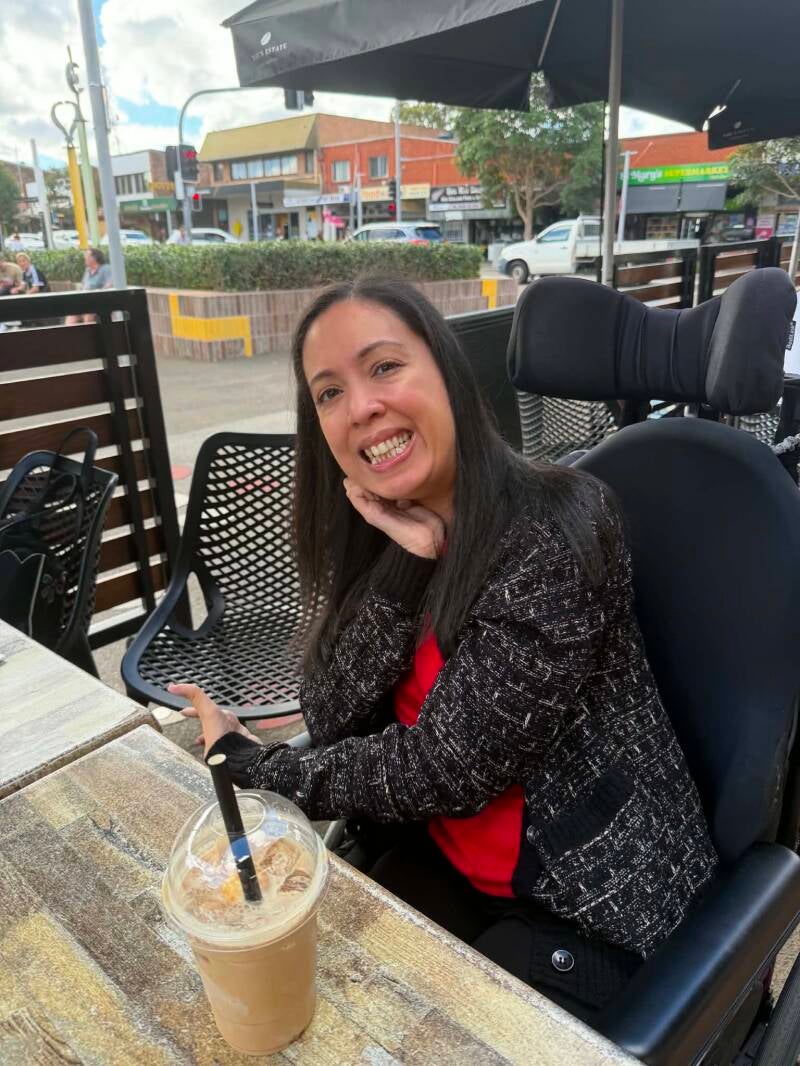
Puberty Changes More Than the Body
Puberty is usually discussed in terms of physical and emotional development.
Bodies change.
Emotions can feel different.
Relationships begin to shift.
Children become more aware of themselves and the people around them.
But puberty can also change a child’s experience of school.
For a child with a disability, existing support needs may interact with new experiences involving pain, fatigue, menstruation, personal care, clothing and physical assistance.
Support that once felt ordinary may suddenly feel much more personal.
Privacy may become more important.
And a young person may become increasingly aware of who is helping them, where that help happens and what their peers know about it.
A support plan that worked when a child was younger may therefore need to change as the child does.
Growing up can change what support feels like, not only what support is needed.
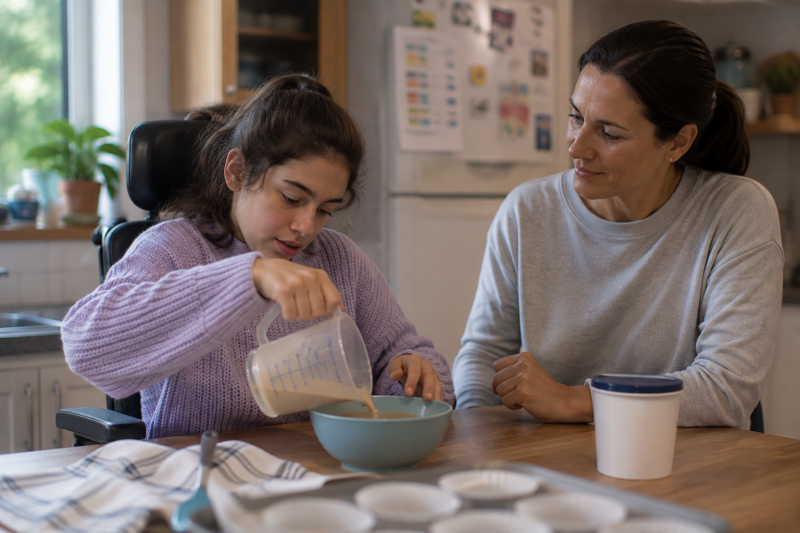
The support may stay the same while the experience of receiving it changes.
When Personal Care Becomes Part of the School Day
Puberty can introduce personal-care needs that cannot simply be left at the school gate.
For some students, managing menstruation may involve much more than having access to sanitary products.
They may need assistance recognising what has happened.
Changing.
Managing clothing.
Accessing an appropriate bathroom.
Communicating privately with staff.
Managing pain.
Or contacting family.
My first period lasted around a month.
My mum had asked the support staff to contact her if the bleeding became particularly heavy, and I knew that arrangement was in place.
When that happened, Mum wasn’t contacted.
I became extremely emotional because I thought I was going to get into trouble with her.
As an adult, I can understand that the situation involved communication between the adults responsible for supporting me.
As a child, I understood it differently.
Something had happened that I knew Mum needed to be told about.
She hadn’t been told.
And somehow I felt responsible.
Children should not have to carry responsibility for communication between the adults supporting their personal care.
They need to know what will happen.
Who will help.
Who needs to be contacted.
And that when something goes wrong, it is not automatically theirs to fix.
Children should never carry the responsibility for adult communication around their care.
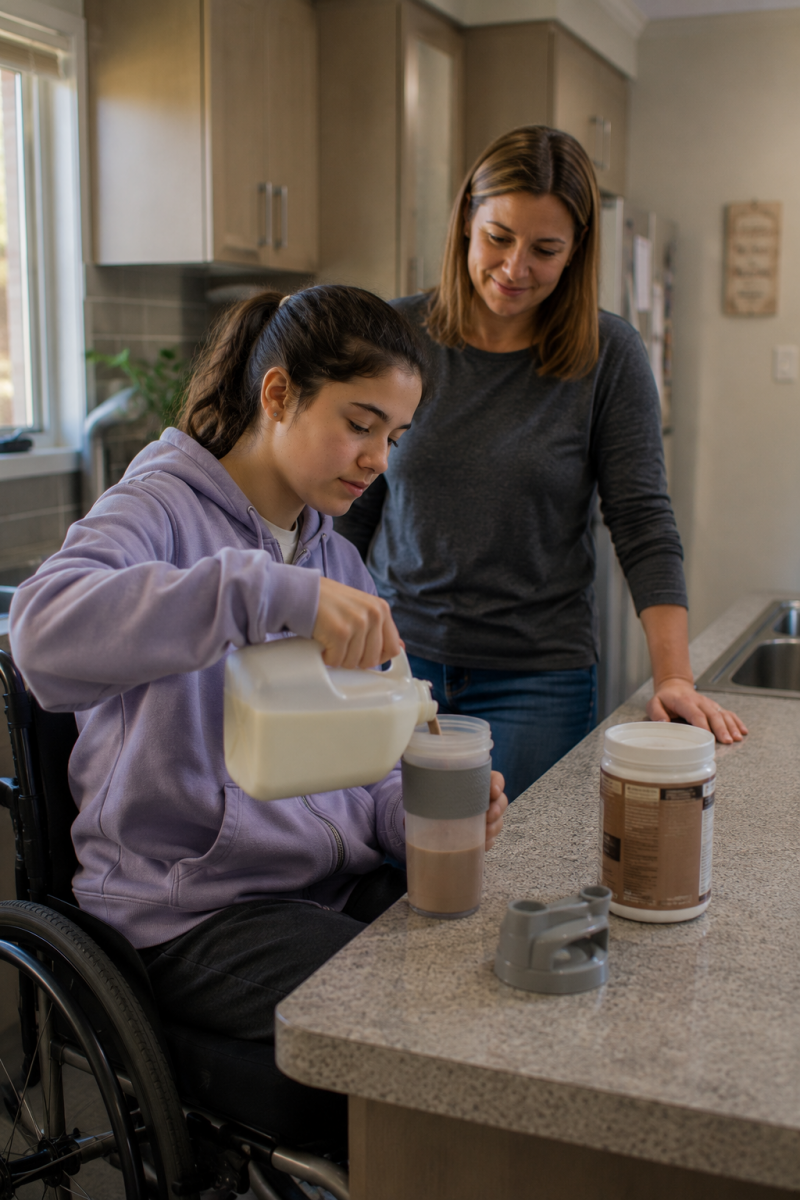
Independence can include knowing when and how you need help.
Puberty Changes the Social Experience Too
Puberty is not only physical.
It changes conversations between children.
What they notice.
What they talk about.
What feels embarrassing.
And what they consider private.
For children with a disability, navigating those changes can sometimes feel particularly isolating.
During primary school, I felt very alone going through puberty.
There were only two other girls in my support class, and to my knowledge they weren’t experiencing the same changes yet.
Mum talked to me about puberty at home.
But it wasn’t something that was really discussed with me at primary school.
I felt as though I was navigating a difficult stage largely by myself.
Then I reached high school and suddenly the experience was very different.
Girls I barely knew asked me whether I had started my period.
I found the question embarrassing.
I felt that I needed to answer honestly, even though some of the girls asking weren’t sharing anything about their own cycles.
At the same time, I had a new teacher aide who needed to assist me with managing my period.
That felt humiliating.
There was a strange contradiction.
Something I had felt largely alone navigating had suddenly become something other people seemed able to ask about or be involved in.
Young people with a disability can sometimes have less privacy around puberty because they need practical assistance, while still having fewer opportunities for ordinary, age-appropriate conversations that help them understand what they are experiencing.
Needing assistance with an intimate part of life should never mean that a young person’s boundaries around that experience disappear.
Needing help with something private does not make it public.
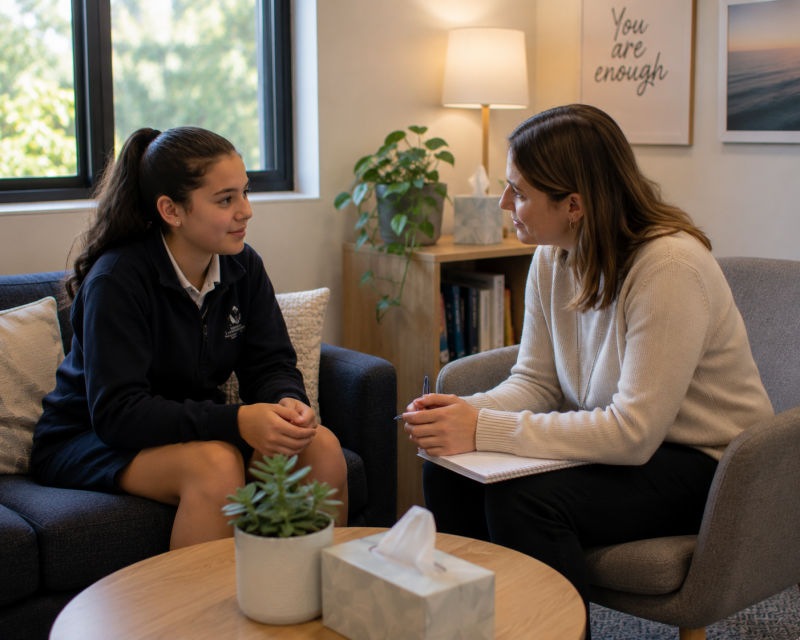
Support should change as a young person’s needs and preferences change.
A Reflection for Parents and Educators
Puberty asks children to navigate an enormous amount of change.
Their bodies change.
Their relationships change.
Their awareness of themselves changes.
What feels private changes.
What feels comfortable changes.
And for children with a disability, their relationship with support may be changing at the same time.
That means adults need to be careful of two very different assumptions:
They needed this support when they were younger, so nothing needs to change.
And:
They’re older now, so they should be able to manage it themselves.
Neither begins with the young person.
Perhaps better questions are:
What do you need now?
What would make this feel more comfortable?
What would you like to do yourself?
Where do you still need help?
Who are you comfortable receiving that help from?
Is there anything about your support that you would like to change?
These conversations may feel more personal than discussions about classroom adjustments or academic support.
But that is exactly why they matter.
Puberty does not make support less important.
It makes dignity, privacy, communication and choice within that support even more important.
To support those conversations, I have created a companion resource called Growing Up With Support.
It is designed to help parents, educators and support staff reflect on whether a young person’s support has grown with them.
The resource looks at changing privacy needs, personal-care support, independence, choice and who the young person feels comfortable receiving help from.
It also includes gentle questions adults can use to involve the young person directly, because what felt comfortable at one age may not feel comfortable a few years later.
Schools cannot prevent all the awkwardness and uncertainty that come with growing up.
But they can make sure children do not have to navigate those changes while also wondering whether their support needs are embarrassing, inconvenient or something they should already be able to manage alone.
Growing up should mean having more ownership over your body, your boundaries and the support surrounding you.
Not less support simply because you are older.
Support should grow with the young person—not simply expect them to grow out of it.
Add comment
Comments