Respite, sleepovers, separation and family choices can all become measures of independence. But children with a disability do not all need to grow towards independence in the same way.

Children can grow in confidence and independence through very different experiences. One pathway does not have to become the standard for everyone.
Children With Similar Disabilities Can Grow Up Very Differently
When I was in primary school, many of my friends with disabilities regularly spent weekends in respite.
I didn’t.
I had significant separation anxiety from my mum, and my parents knew that sending me away would have been extremely difficult for me.
Our weekends were also often filled with family gatherings. My parents knew I would generally be happier spending that time with my family.
But their decision was not always understood that way.
There were school staff and other parents who judged my parents for not sending me to respite.
Looking back, I think there was also a cultural misunderstanding involved.
Ideas about family closeness, separation, sleepovers and how much time children spend with extended family can vary between families and cultures. What looks like dependence through one lens may simply be ordinary family life through another.
Two children can have similar disabilities and still need completely different things from childhood.
One child may thrive in respite.
Another may find independence through community activities.
One may enjoy spending nights away from home.
Another may need much more time before separation feels manageable.
None of those experiences alone tells us how much independence a child is developing.
Different childhoods do not have to follow the same path towards independence.
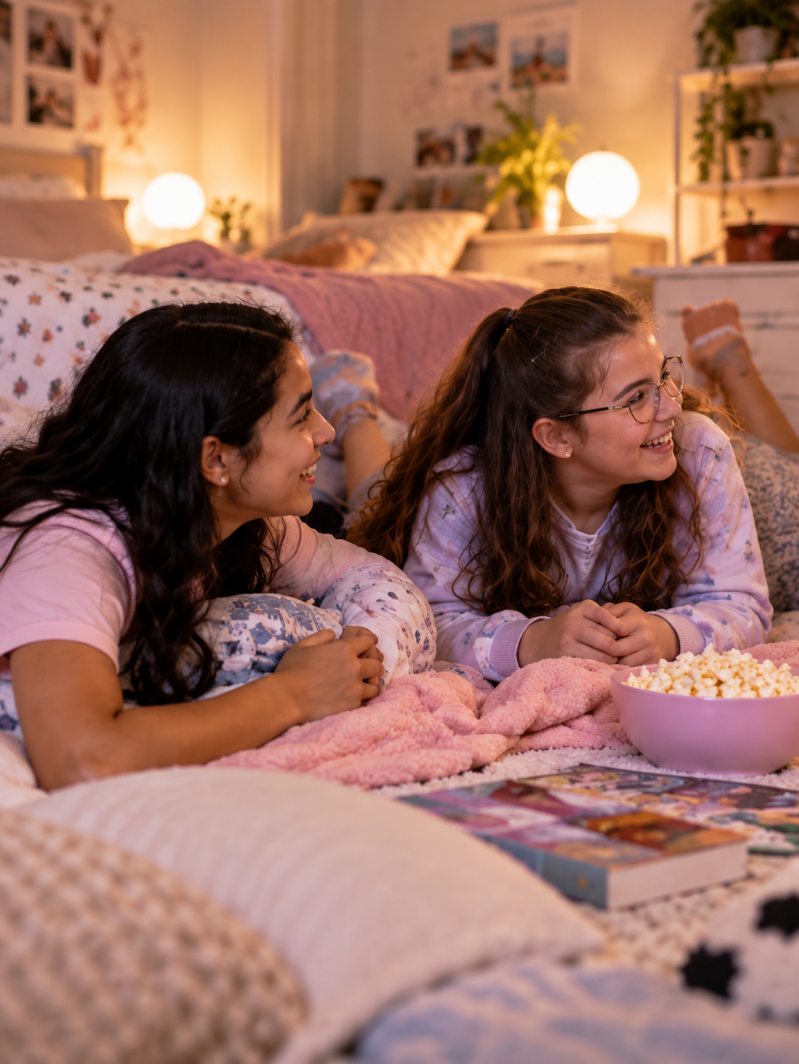
A child does not have to complete every part of a conventional milestone for the experience to have value.
Support Can Be Part of Building Independence
My parents were not opposed to me becoming more independent.
My mum enrolled me in Girl Guides partly because she wanted me to gain independence and have experiences outside my usual routines.
Girl Guides sometimes made me anxious too.
But I was encouraged to participate.
I had many different experiences and developed meaningful friendships.
I also went on camp.
My mum came with me.
If independence is measured primarily by separation, having Mum there might make that camp appear less independent than going without her.
But her presence made the experience accessible to me at that point in my life.
I still went.
I still participated.
I still encountered a different environment and had experiences I would not have had by staying home.
Support did not erase what I gained from the experience.
This is particularly important for children with a disability because some may continue to need physical assistance even as their autonomy grows.
Their pathway may not follow the familiar pattern of:
adult helps → child learns → adult disappears.
Instead, growth might mean the child has more say over what they do, who supports them, how support is provided and which experiences they want to pursue.
Support can be the bridge to independence rather than evidence that independence has not happened.
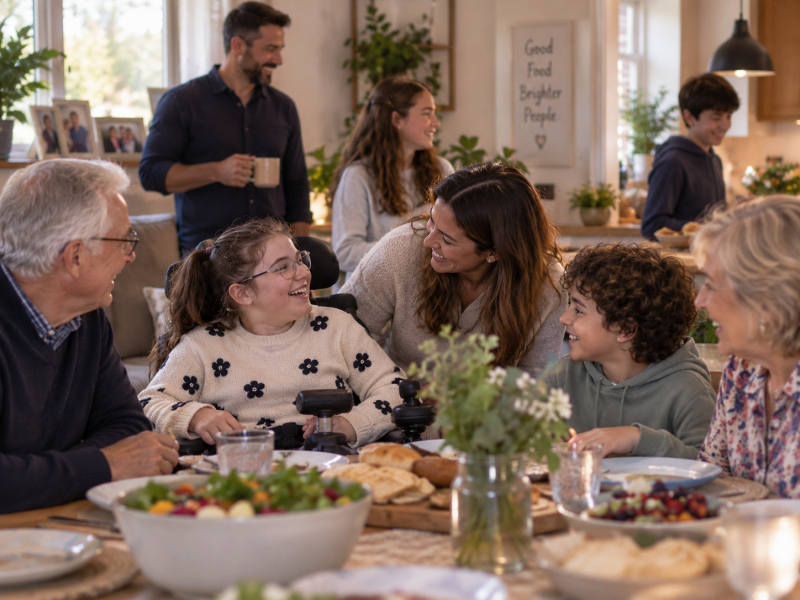
Family closeness can reflect culture, relationships and ordinary family life. It should not automatically be interpreted as dependence.
Participation Does Not Have to Look the Same
By high school, sleepovers looked different again for me.
Because of my support needs, there was no realistic way for me to simply sleep overnight at a friend’s house in the same way my friends could.
But I still went.
I spent time with everyone and participated in the social part of the night, then went home for the support I needed.
The next morning, I might meet my friends at the shops, or they would come over.
I couldn’t always participate in exactly the same way.
But I could still participate in the friendship.
That distinction becomes important when we think about independence for young people with a disability.
Sometimes adults become focused on whether the young person can complete the conventional activity.
Can they stay the whole night?
Can they go without a parent?
Can they do it without help?
But perhaps we also need to ask what that activity is supposed to provide.
Friendship.
Belonging.
New experiences.
Choice.
Confidence.
Time with peers.
A young person may be developing all of those things while still needing the activity itself to be adapted.
Different participation is still participation—and it can still build independence.
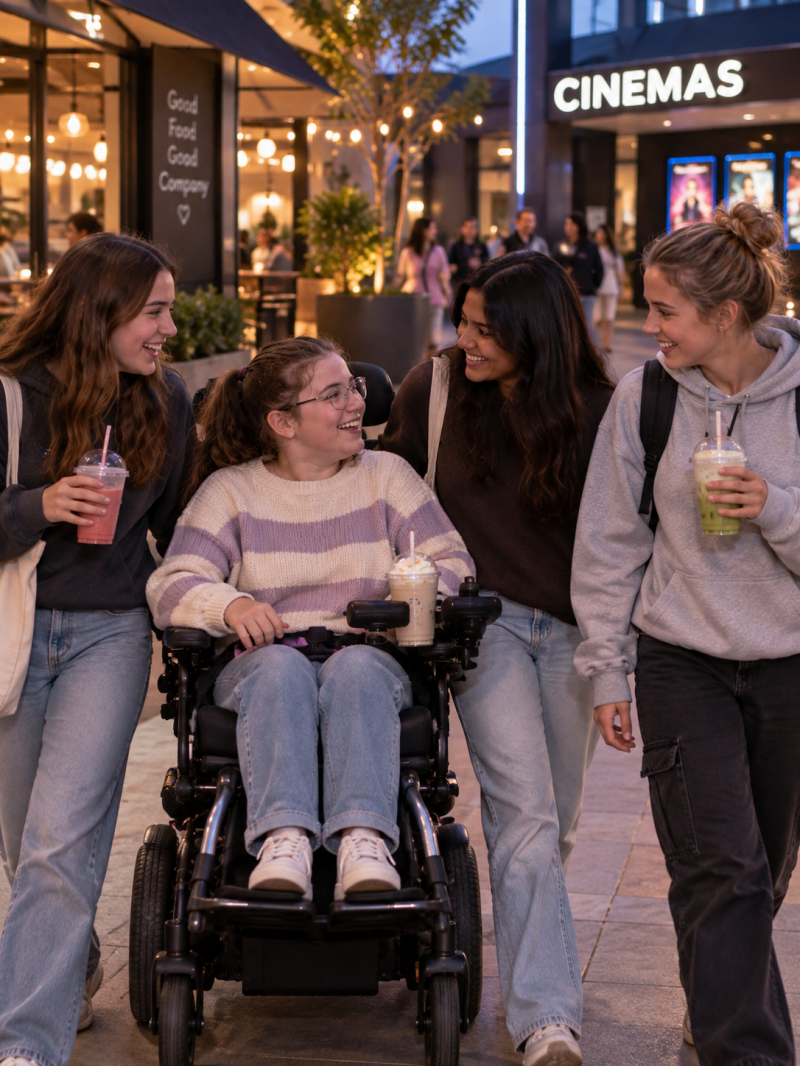
Independence can grow through relationships, experiences, confidence and choice — not only through separation from family.
A Reflection for Parents, Educators and Support Providers
Encouraging independence matters.
Children with a disability need opportunities to try things, develop relationships, take age-appropriate risks, make decisions and experience life beyond the routines adults create around them.
Sometimes that will involve encouragement through anxiety or uncertainty.
Sometimes it will mean stepping back.
Sometimes it will mean providing more support so the child can participate in something new.
And sometimes it will mean adapting an expected milestone rather than insisting that the child complete it in the conventional way.
When we think a child needs to become more independent, perhaps we can ask:
What are we hoping this experience will give them?
Is the child gaining greater choice and confidence—or simply becoming better at separating from their family?
Are we respecting their support needs while encouraging growth?
Could the same goal be reached another way?
Are family or cultural differences being mistaken for dependence?
Are we comparing this child with peers who have a disability rather than looking at what development means for this individual child?
And importantly:
Whose idea of independence are we asking this child to grow towards?
Looking back, I wasn’t being taught to avoid independence.
I was being given different ways to develop it.
My parents encouraged me into experiences that sometimes made me anxious, while also recognising that I did not need to follow every conventional milestone for those experiences to matter.
Independence did not require one dramatic moment of separation.
It developed gradually as my world became bigger and I gained more confidence and choice within it.
That is why I created More Than One Way to Grow, a reflection resource for parents, educators and support providers. It is designed to help adults look beyond the expected milestone and ask what skill, confidence or autonomy they are actually trying to build—and whether there may be another pathway that suits the child better.
Because sometimes the goal is not for the child to complete the same experience in the same way as everyone else.
The goal is for them to keep growing in confidence, choice, connection and control over their own life.
Children with a disability deserve that flexibility.
Not freedom from every challenge.
Not freedom from every form of support.
But freedom from the assumption that there is only one acceptable way to grow up.
Independence should give children more ways to experience their world—not one more way they are expected to fit into it.
When Independence Already Has a Path
Independence is something we naturally want children to develop as they grow.
We want them to make choices.
Build confidence.
Develop relationships outside their family.
Try new experiences.
Learn what they can do for themselves and what support they need from others.
But sometimes independence comes with an expected pathway.
Spend more time away from parents.
Stay overnight somewhere else.
Go to camp without family.
Need less help.
Become comfortable receiving support from other people.
For some children, these experiences can be valuable parts of growing up.
But they are not the only way independence develops.
Children with a disability can have similar support needs and completely different childhoods. Family life, culture, personality, anxiety, disability and available support can all influence what growing independence looks like.
The question should not simply be whether a child is completing the expected milestones.
It should be whether their world, choices and confidence are gradually expanding in ways that are meaningful to them.
Independence should expand a child’s world—not prescribe the path they must take through it.
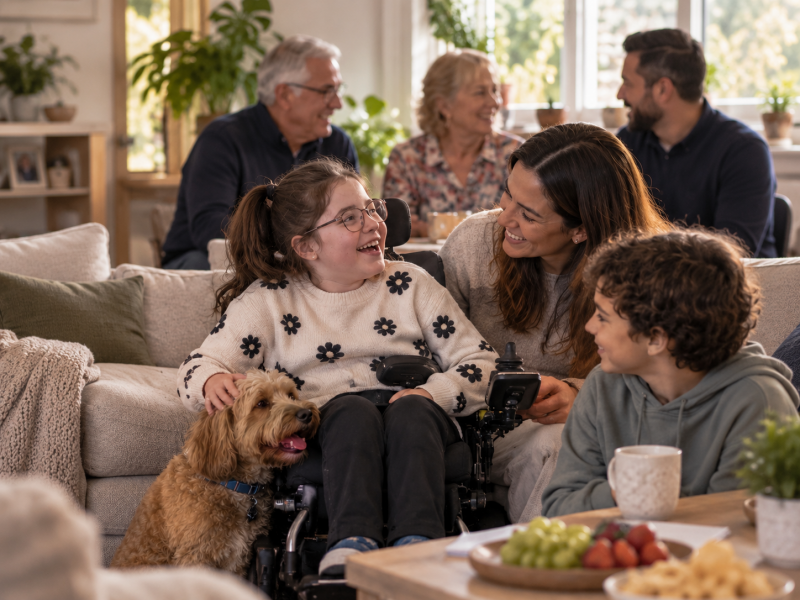
Children with similar disabilities can have very different childhoods without one being better preparation for independence.
When Separation Becomes the Measure of Progress
Time away from parents can create valuable opportunities.
Respite can be positive.
Camps can be exciting.
Sleepovers can strengthen friendships.
Trying something without a parent nearby can build confidence.
But there is a difference between using separation as an opportunity and using separation as evidence of independence.
I didn’t even stay overnight at my aunt and uncle’s house when I was young.
When I was invited to friends’ sleepovers, my family found another way.
I would go in my pyjamas and spend the evening with my friends, but Mum would pick me up before bedtime.
Some of those experiences still made me anxious.
I wasn’t encouraged to avoid everything that felt uncomfortable. Part of the reason my parents encouraged me to go was because they wanted me to have those social experiences and gradually build confidence.
But completing the overnight stay was not treated as the thing that would prove I had succeeded.
I could participate in the friendship without completing every part of the conventional milestone.
That distinction matters.
Children sometimes need encouragement to move beyond what feels comfortable. But discomfort does not automatically become beneficial simply because adults associate the experience with independence.
We can ask:
What is the child gaining from this experience?
rather than:
Have they proved they can be away from their parents yet?
Sometimes independence grows because adults find another way—not because they force the expected one.

Support can make new experiences possible while confidence, friendships and independence continue to grow.
When Family and Culture Are Mistaken for Dependence
Families do not all raise children in exactly the same way.
Some families expect children to spend considerable time away from home as they grow.
Others remain closely connected.
Some children regularly sleep at relatives’ houses.
Others don’t.
Some families spend weekends pursuing separate activities. Others gather frequently with extended family.
Culture can influence these choices, but so can personality, circumstances and simple family preference.
When a child has a disability, however, ordinary family differences can sometimes be interpreted through the language of dependence.
A parent who provides significant support may be seen as doing too much.
A child who prefers family activities may be seen as needing greater separation.
A family that chooses not to use respite may be assumed to be limiting independence.
Sometimes those concerns need to be explored.
Children with a disability should have opportunities to develop relationships, confidence and experiences beyond their parents.
But family closeness itself is not evidence that those opportunities are being denied.
We need to be careful not to take one cultural or family model of growing up and turn it into a developmental standard for every child with a disability.
Not every difference in family life is evidence that independence is being restricted.

Different participation is still participation. The friendship can matter even when the activity needs to look different.
There Should Be More Than One Way to Grow Up
As I moved through high school, I gained a lot of independence through my friendships.
I went out with friends.
My social world expanded.
I had more experiences away from my parents and made more decisions about how I wanted to spend my time.
The independence that some people seemed worried I wasn’t developing when I was younger did develop.
But it didn’t happen because I followed the same pathway as friends who regularly went to respite.
It developed through experiences.
Through relationships.
Through being encouraged to try things that sometimes made me anxious.
Through adaptations that allowed me to participate.
Through support when I needed it.
And through growing older and becoming ready for different things at different times.
This doesn’t mean every decision my parents made should become the model for another child either.
That would simply replace one accepted pathway with another.
Some children will love respite.
Some will thrive on camps away from family.
Some will desperately want their first sleepover.
Others will develop independence through completely different experiences.
The goal should not be to make every child look equally independent from the outside.
It should be to help each child develop greater choice, confidence and influence over their own life.
There is more than one way for a child to grow into their independence.
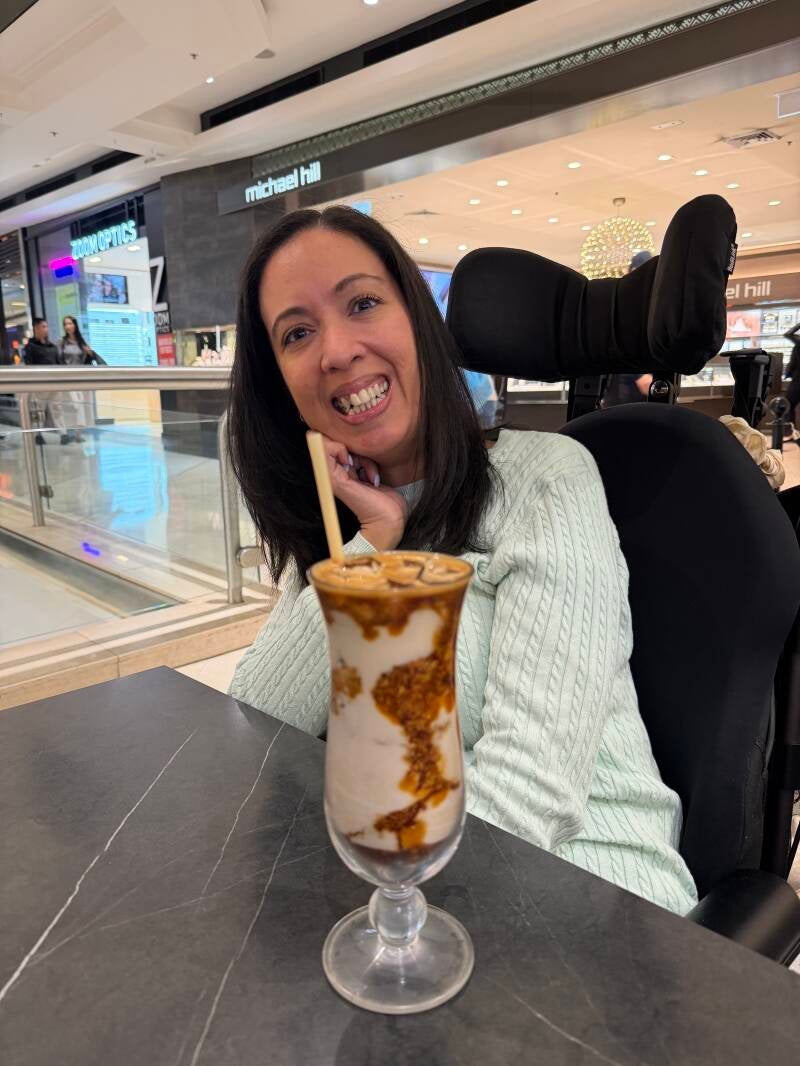
Looking back, I wasn’t being taught to avoid independence. I was being given different ways to develop it.
Add comment
Comments